“Yoko is as important to me as Paul and Dylan rolled into one. I don’t think she will get recognition until she’s dead. There’s me, and maybe I could count the people on one hand that have any conception of what she is or what her mind is like, or what her work means.”
-John Lennon
In the middle of rolling my wheelchair from one room to another, Yoko Ono suddenly entered my brain. Immediately i began to wonder when i first became familiar with her.
Similar to Winnie Mandela, Amy Jacques Garvey, Shirley Graham DuBois or Mama Zondeni Sobukwe, people continue to view Yoko Ono as an extension of her husband. Even though i’ve heard her name ever since i was a child (as anything associated with The Beatles was fairly ubiquitous in popular culture), when i came to know who she was, i was always fascinated with her.
For as long as i can remember i have been into what is considered the avant garde of music, art, poetry and film; i saw it as an extension of the punk ethos- a rejection of the status quo. When i first saw Yoko Ono’s primal screams on the Rock And Roll Circus, i saw her as the predecessor of bands such as Free Kitten and The Boredoms. ‘Give Me Something’ was the one song i had on repeat from Double Fantasy, her collaborative (final) album with John Lennon. i heard it, and it reminded me of Siouxsie & The Banshees. Approximately Infinite Universe (Ono’s third solo album) has become one of my top 50 favorite albums of all time, and with the risk of being ridiculed, will argue that i prefer Lennon’s work with Ono to any Beatles album (then again, i am a person who openly considers St. Anger to be one of the top 10 greatest of all time, so my musical preferences should be of little to no surprise).
Make no mistake- Ono has her share of contradictions. This is not the primary aim of the discussion. Among other things, even with the heavily problematic utilization of a racial epithet as an analogous address toward the damaging effects of patriarchy (from the album Sometime In New York City), her grievances are not incorrect.
i saw Ono in the late 1990s at an early film retrospective she hosted at the Whitney Museum. During the question and answer period, you could see her increasing frustration with the questions and comments which downplayed her artistic integrity. The moment that will forever be sealed in my brain was when a man stood up and began to name drop a series of (male) musicians who could have worked with her on the soundtrack to one of her films. Steely eyed, she responded, “That was all me.” Embarrassed, the man slowly sat back in the chair.
i walked out of the museum with a greater respect for Yoko Ono, as a woman working outside the parameters of gendered and artistic expectation.
Cut Piece (Rob Corder, CC)
“In Fluxus there has never been any attempt to agree on aims or methods; individuals with something unnameable in common have simply coalesced to publish and perform their work. Perhaps this common thing is a feeling that the bounds of art are much wider than they have conventionally seemed, or that art and certain long established bounds are no longer very useful.”
-George Brecht
“Force and intimidation were in the air. People were silenced. Cut Piece is my hope for world peace. When I first performed this work, in 1964, I did it with some anger and turbulence in my heart.
This time I do it with love for you, for me, and for the world.”
-Yoko Ono, 2003
The message lined within the gatefold of 1973’s Approximately Infinite Universe makes a pertinent defense against ‘Girlboss’ feminism, ultimately rooted in patriarchy and capitalism: “The aim of the feminist movement should not just end with getting more jobs in the existing society, though we should definitely work on that as well. We have to keep on going until the whole of the female race is freed.
How are we going to go about this? This society is the very society which killed female freedom: the society which was built on female slavery. If we try to achieve our freedom within the framework of the existing social set-up, men, who run the society, will continue to make a token gesture of giving us a place in their world. Some of us will succeed in moving into elitist jobs kicking our sisters on the way up. Others will resort to producing babies, or be conned into thinking that joining male perversions and madness is what equality is about: “join the army” “join the sexist trip,” etc.”
Messages that address intersections of oppression in some fashion are always going be timeless, similar to art that challenges the notion of what the capitalist class considers ‘decent’ or ‘presentable’.
Within the the Fluxus movement (of which Ono was a part of) was a manifesto in which the objective was the direct opposition to the domination of commercial/bourgeois and Eurocentric notions of art. Of course, thinking about Fluxus led me to further think about Adam Neely’s commentary regarding how Western/European imperialism has shaped how many come to critique and interpret music; though Neely was critical of the systems that dictate these vehicles of education and criticism (and not necessarily the music itself), Neely’s examination in many cases was reduced to ‘wokeness’, with a focus merely on the baseline and not necessarily the content within it. Many arguments against Neely seemed to actually prove his point.
The result of the commercialization of art and music is the reduction of access to the masses. When we think of Classical/Baroque music, it’s equated to something that is ‘high class,’ when in some cases it was anything but. Several currently revered musicians left this earth in poverty, and were debated over during their time on earth. One of the greatest examples of this is Antonio Vivaldi’s Le Quattro Stagioni (translated into The Four Seasons). Composed during his time as a teacher at the Ospedale della Pietà (simultaneously encouraging girls to play music), the concerto of 12 movements was deemed ‘radical’ at the time, as this format was not common.
It would not be surprising that someone in this day and age would regard Fluxus as being synonymous as ‘high art’ or ‘high class’, since it may not currently be thought of as confrontational as was originally intended. What does remain confrontational is the existence of Yoko Ono.
Even with her contradictions as an individual, her existence in this world as an Assertive Asian Woman Artist automatically politicizes her, despite the constant lament that ‘politics should stay out of art and music.’ The greatest art is going to lead us to question our place in society, and acknowledge the intersections within it. Both Ono and fellow Fluxus artist Shigeko Kubota actively struggled against patriarchal mores (in both Japan and the U.S.) through active works such as Cut Piece and Vagina Painting.
Despite Ono being a successful artist in her own right, her legacy will forever be tied to John Lennon, who initially met her at one of her performances. Even worse, despite being countered by members of the Beatles themselves, she continues to be vilified for being the person who single-handedly ‘broke up the Beatles.’
Similar to my feelings on Metallica’s St. Anger and Lulu, or Beefheart’s Trout Mask Replica; while i have no problem with Ono’s output, i do understand why both former and latter works are polarizing. i will not argue about this. That said, when i see comments calling her everything from a “Manly looking beast… who has the face that would make a freight train take a dirt road,” to a “pesticide,” to “a verified witch,” as well as, “I’m just here wondering how fucking high Lennon was that he saw any beauty in that faulty alarm siren of a human”… right on down to “Chapman shot the wrong person,” it’s easy to see that it becomes less about art and more about racism and patriarchy.
As John Lennon openly struggled with his own experiences as one who committed violence upon women and children (the man also mocked disabled folks on camera); he continues to be lionized as his history of abuse is seemingly expunged from the vocabulary of admirers, and the same violence upon which Lennon wished to atone for is enacted upon his wife.
We live in a society starved of maturity, where we are conditioned to see everything as binary, as a dichotomy. It should be clear that accountability and addressing one’s contradictions are not synonymous with ‘cancellation,’ and yet many take offense at just that, dishing out death threats and doxxing to those who dare challenge the idealized images of a celebrity.
While it was ultimately idealistic; i do not have the definitive answer on what (or who) led John Lennon to a more philosophical trajectory, mixed with a socialist-leaning political analysis. What we do know (whether it was with Maharishi Mahesh Yogi or Yoko Ono) is that a spectrum of the cultural and spiritual Asian landscape had a hand in the latter chapter of his life’s journey. It could be possible that Lennon held a warped fetishishization of all that is ‘Asia’. Again, i do not know.
(Also) Again, what we know is that in a society based on hierarchies and imbalance; there was a resistance to the introduction of an increased feminine element in Lennon’s life journey. The more time he spent with Yoko, the more she became an ‘equal partner’ as opposed to simply, ‘a wife’. The more she developed into an ‘equal partner’, the more he was forced to question the intersections of oppression, both in society and within himself. The argued root of the opposition was not only in Yoko Ono ‘killing the Beatles’; she also emasculated John Lennon.
W Magazine recreation of ‘Cut Piece’
This may seem a strange or inappropriate comparison to some- while Yoko Ono’s actions as a whole have not resulted in materially dangerous consequences; my defense of her is not unlike those who supported an OJ Simpson acquittal in 1994. The support is not of the individual, but what they represent in a hierarchical social structure. Aside from the most dedicated of the ‘Free OJ’ contingent; the cries of joy upon news of this acquittal (particularly after the acquittal of the LAPD officers that beat Rodney King on camera in 1991) did not necessarily represent support for OJ himself. Simpson was a symbolic victory. It can be debated all day whether or not this was an apt response; but if we are quick to judge or dictate how the recipients of structural and systemic violence have responded to such an event, and if we are quick to see all responses to this acquittal as monolithic; we must question the root of our own reaction.
Among mainstream conversation was the focus on the acquittal itself. The view was pretty cut and dry: OJ was ‘one of the good ones,’ until he wasn’t. Despite his long history of abuse towards women, he was now seen as a brute; he became racialized in a society he assimilated in, because he murdered (or had a hand in murdering) a blonde, white woman- the pinnacle of femininity in a white supremacist system. Among African communities in particular, there was a more nuanced understanding that despite Simpson rejecting all connections to ‘the culture’ until it was convenient, and despite him being a traitor to the people’s class; the circus of the trial led the world to witness even further the racist tactics of the Los Angeles Police department (LAPD), and attorney Johnnie Cochran was able to exploit this. He emphasized to the jury: “If you don’t speak out, if you don’t stand up, if you don’t do what’s right, this kind of conduct will continue on forever.”
Cochran had his share of contradictions in whom he represented as a defense attorney; that said, even if those he defended have been incredibly problematic; Cochran most likely looked at his role as serving a larger purpose, particularly in light of his work defending comrades such as Geronimo Ji-Jaga Pratt.
My defense of Yoko Ono is not about Yoko Ono herself. i do not personally know her enough to defend her character as an individual. Ono (and others like her) participated in paving the way for confrontational art that holds a mirror up to society. The legacy of Ono (and her comrades in Fluxus) gave way to the marriage of art and unconventional voice, with artists such as Kate Bush, Lene Lovich, Diamanda Galás, Mike Patton (and his many projects) and Klaus Nomi. Her body of work is just as important as Albert Ayler, Sun Ra, Pharoah Sanders, The Residents, John Coltrane, Keiji Haino, Sonic Youth or John Zorn. To some degree i’m sure she has even had some subconscious influence in my own experience as a person who has participated in art/writers’ collectives, as well as the curator of house shows and makeshift ‘galleries’.
After a number of years from a break, within the past month or so i began painting again. It’s something i missed greatly, and perhaps this written piece is the universe contributing to making a connection to what i’ve already renewed in myself.
In a culture where so much is devoid of context and reduced to a meme, we must appreciate Yoko Ono beyond the perception that she is some ‘unhinged wild woman’ who wails in the middle of a museum.
This piece is ultimately not about Yoko Ono as a person, but the voice that is within each of us, constrained by the cloak of society’s limitations or hierarchical structures. Each cut we make of the cloak that covers the most vulnerable parts of ourselves, will eventually reveal the beauty that lie underneath.
(RECORDED ON MARCH 15, 2024) While there are connections based on interest of a particular piece of music or band; many of us live lives outside of that singular interest.
jamilah and Anthony Broome met via the Metal Up Your Podcast community, specifically through the Discord network. Because life stories are so vast and interesting, jamilah invited him to come on and speak about his experience/history as a sports writer, a forum moderator (Discord being one of those places), and of course, a ginormous fan of Metallica. How do these worlds merge? What are some of the challenges that come up? What are some of the paths to inspiration (and peace among the noise)?
If you’re interested in joining the Discord, let us know and we’ll get a link to you! If you have any questions, comments, etc. you can reach us here:
(Content acknowledgement: Throughout this post there will be mention of suicide and depression.)
Leaving New York City and approaching the Lincoln Tunnel, there is a large mural with the old adage, “Nothing Is Impossible.” As i stared into the slight gaudiness of the font and semi-bright paint job, i silently disagreed, as at the moment, everything feels impossible..
It begins with night 1 of 2.
As a person who used to skateboard and was heavily into skate culture (and particularly loved the Bones Brigade and folks like Steve Olson) primarily in my teens to early/mid 20s, i was excited to attend a conversation/presentation/Q&A with Rodney Mullen and Tony Hawk. On the day of the event, i was not expecting to contact the therapist i was seeing as a follow-up to my accident, nor was i expecting to call 988 (the U.S.-based suicide hotline).
i wish crippling depression or (active and/or passive) suicidal ideation on no one. It is an appendage you’ve learned to adapt to, so you figure out how to manage it. However, there are days you don’t see coming, and a switch in your brain flips.
Due to this ‘switch’ i was not in the greatest head space to attend this event; i attended though, because i had no idea who i could give my ticket to.
As an amputee who travels primarily in a wheelchair, when attending a venue there’s a level of ‘othering’ that becomes difficult to describe at times; it is assumed you need assistance at all times, to the point of repeatedly asking if you are sure despite saying you don’t need assistance. There are some who will speak to you in a patronizing manner, as if you are a child. It feels quite isolating to experience this (especially when being relegated off to the side of the ‘disabled section’, where your line of sight is usually obscured, or at some points in the nosebleed sections, as if ADA is an afterthought). The feeling of being ‘othered’ in combination with suicidal ideation is again, not a thing i would wish on anyone.
(Photo courtesy of ada.gov: The current photo on the front page of the ADA’s site has all these beautiful and cool people on there. Make no mistake- while the photo displays more than a tinge of racial capitalism; it’s still cool to see a ‘punk kid’ with a ‘hawk and tattoos.)
For this specific event i was in the second row (a rare case in my experience). i was located to the farther right of Tony Hawk, but still in his direct line of sight. It seemed like he looked directly at me a few times, but that’s not something i will ever know. My biggest worry was, if he actually did see me, whether or not he detected that i wanted to disappear at that moment.
While Hawk was the more stoic of the two (busting out a spontaneous joke (or three)); i sensed the infectious nature of the joy and humility coming from Rodney Mullen. The both of them being just old enough to be my big brothers, Mullen has a whimsical and almost childlike approach to how he responds to things. It honestly was a joy to see, in a world full of cynicism. As i say all this, i admit that i felt none of it.
On the culture and community of skateboarding, Mullen says: “…(I)t is a union of sport, of art, community, connection, vocabulary that unites us in ways, God knows. Tell me there’s not a lot of at-risk people; when is something so valuable that is keeping them… That they’re haunted through child abuse or whatever it is they’re going through; drug addiction… Should they end it now? Skateboarding has a cohesion to say, ‘At least I belong…’ The essence of our community is that we share something so much deeper, that shapes us, lifelong. We share something not only physical, but an actual language that unites us.”
What happens when you don’t necessarily feel part of a community? i came up watching and being inspired by folks like Hawk and Mullen, but i haven’t skated in years. Currently, i feel inspired by the younger wave of skaters like (fellow amputee) Felipe Nunes. Despite all this inspiration i felt alone as i saw the masses of skaters coming together ‘in community’ at the Beacon Theater, and i wondered what i was doing there. In a sea of outsiders, i still didn’t belong.
i have been waiting for years to see Incognito, one of my favorite bands of all time. Many an attempt has been thwarted, due to particular life events. Of course, the moment this activity becomes a reality, it is marred by a mental health crisis.
Here is where we encounter Night 2: It began with the other usual act of being rolled through the kitchen (on this evening it was Sony Hall), in order to get to the venue. i’m already generally feeling as if i’m in everyone’s way (which is one of the primary drivers to the ideation i have). Rolling through a narrow kitchen (to get to and from the bathroom as well) does not make me feel any less of a burden to those around me.
i am rolled to the end of a table. There are three people sitting on the other end. One of the men looks familiar; we have met at the Blue Note before (prior to the pandemic, when i had two legs), but it is clear he does not recognize me. About a minute after i got to the table, a man with long locs arrived. He automatically introduced himself to the other parties at the table, but said nothing to me. He spoke about how he was a professional musician; i wanted so badly to connect and mention that i played music as well, but i didn’t have the energy to project my voice.
Most people who know me perhaps have little to no awareness of how shy i am. It takes a lot for me to approach people, but i do it because i crave human connection; it’s not because i’m necessarily a ‘people person’ or an extrovert. If i am experiencing a mental health crisis around strangers, my voice at times is barely audible.
A friend of the man with the locs soon approached, and sat at the table. Automatically, he turned his back to me. The man with the locs immediately engaged a woman who was attending alone and soon sat across from me, and next to him. i felt like the outcast at the lunch table amid the ‘cool kids’. i once again felt i was in the way, especially after most people who passed me kept bumping into the wheelchair.
There are times i bring a book with me to shows, where i can read before anything begins, or in between bands. i forgot to grab one as i was rushing out of the house, and as a result i sat on the opposite end of the ‘cool kids” table with my head down, wanting to, again, disappear.
In the midst of hopelessness i looked up to find what was perhaps a momentary ‘kindred spirit’: a crew member on stage in a Metallica ‘…And Justice For All’ shirt. i wanted so badly to connect with this person, but we were on the opposite ends of the venue.
We should never make automatic judgements on someone’s musical tastes, based on whatever show they’re attending. If you were to see me at the Incognito show, you most likely wouldn’t know i listen to everything from Nat Adderley to Zeni Geva… just as we should never make assumptions about how someone is doing. People who are seemingly filled with joy on the outside may also be struggling– for all we know, that show could have been someone’s final moment of connection, before they ended it all.
i tend to do a lot of people watching when i am at a venue; on this occasion i was hyper focused on seeing if there were others who may be struggling like me. i wanted to let them all know they were not alone. But i can never know. So i felt alone, even if i wasn’t.
At the table i did shed a tear or two in the dark, but for much of the show my eyes welled up. i automatically knew i was going to cry rivers if they got to my favorite ever song of theirs, ‘Still A Friend Of Mine’, because it is a song i have cried to several times. During the set my bladder became so full it was about to burst, and something told me that it was going to happen when my favorite song came on.
My internal indicator was absolutely correct. The moment i closed the door to the bathroom and heard Jean-Paul ‘Bluey’ Maunick’s long (inaudible from the bathroom) monologue, i knew this was it. The moment the first two notes played, everything i was holding at the table left my body, and i began sobbing. In fact, there were a few trips made to the bathroom.
The band (and all others around me) were seemingly celebrating the gift of both music and life. i welcomed the positive energy around me, but i felt nothing but emptiness inside. This juxtaposition was simultaneously overwhelming and heartbreaking. This is the first time i’ve gone to a show (of one of my all-time favorite bands in particular) and experienced difficulty in finding joy, despite how great the show was.
Bluey (the founder of a band that rivals (but definitely beats) Pigface, in terms of the number of folks who have contributed… with Incognito, Bluey stated it was over the 1000 mark) made a closing speech after their set (which averaged about two hours), calling for a global ceasefire. He didn’t name a particular place on the map, but he was quite decisive in his focus on children being murdered in the name of political will and the fight for land. He may not have named names, but it was undeniable that many in the audience had a particular point of reference and interpretation of where he was coming from.
He did indeed speak of the fact that the role of music (Incognito’s in particular) should be to unify, regardless of location, ideology, spiritual practice, political belief, and all of the other seemingly polarizing factors. These types of speeches do frustrate me; although people have positive intentions when they say these things, the lack of decisiveness on this perspective potentially opens up space for an environment you did not necessarily intend for there to be. Whether you choose to be more measured, or frank (such as Kurt Cobain’s statement: “If any of you in any way hate homosexuals, people of different color, or women, please do this one favor for us-leave us the fuck alone! Don’t come to our shows and don’t buy our records.”), the importance is that it is done.
Whatever frustration i had was short-lived, as Bluey began to talk about the isolation elders felt as the pandemic raged on. As he urged everyone to reach out and connect with people who may be experiencing loneliness, my eyes welled up once again as i saw people hugging and meeting new people. The band bowed and left the stage as Bob Marley & The Wailers’ ‘One Love’ played. Given the subject matter Bluey was addressing, it was one of the few times i’ve seen any associations with the song make sense. i’ve seen many focused on the chorus, without acknowledging the message. That said, whatever happiness i felt for others still did not assuage the emptiness i was feeling. —————————————————————————————————————————-
As i was about to leave, i saw Maysa Leak (Bluey’s muse, and amazing long-time Incognito co-vocalist) sitting at a table, signing merch. i felt so plain, in the midst of her stunning beauty and sophistication. She gestured a ‘hello’ and slightly moved over in order for me to pass. i did stop to say hello; i also thanked her for the music, and the message. She returned thanks. i may have been feeling emptiness; however, this does not mean that the love in that room didn’t resonate with me.
i also informed her that i was feeling suicidal. In response, she said “It’s gonna be alright.” i asked her for a hug, and i wept as she embraced me. She repeatedly said, “It’s gonna be alright.” i felt comforted and reassured in that moment by this stranger. She didn’t tell me that “Killing yourself is something you shouldn’t do,” or that “It’s a permanent solution to a temporary problem.” She didn’t say, “there’s so much to live for,” or “If (you) did it, (your) family would be upset”- things that are not necessarily helpful for people who are experiencing ideation. Most of us already understand how difficult it will be for others. Telling us how ‘bad’ it is doesn’t get to the fact that all we want is for the pain to dissipate.
After our embrace, she dropped some merch in my lap. i rolled into the elevator to get to the ground floor, and i again, began to weep.
As i waited for my ride inside the hotel (Sony Hall is on a lower floor), i saw the crew member outside with the Justice t-shirt. After getting his attention, i told him that Metallica is my second favorite band, and that Incognito is also one of my favorite bands. He responded, “Is Incognito your first?” We talked a bit about Metallica, and he mentioned that he was trying to get members of Incognito to give metal a chance. He asked if i was going to any more metal shows in the future, and i informed him that i was going to see Judas Priest later this month. He excitedly talked about seeing them live some years ago.
My fellow Metallica ‘kindred spirit’ (and fellow outsider, at least for the evening)’s name is Steve.
i suppose these moments carry with them an interesting twist; as i was at one of the lowest points in my life (resulting in, once again calling the hotline), i ended up meeting members of Metallica- the band who had a hand in saving my life. Here is another point- perhaps lower than that August day. i ended up meeting a person in another one of my favorite bands of all time, who happened to console me when i needed it. i then met a man who was a crew member of said band, wearing the shirt of a band who had a hand in saving my life. i didn’t tell Steve any of this, but now he (as well as Maysa, and the woman who sat across from me, who bid me a good night before she left) has become a part of my life’s story.
It was a good feeling to smile in between the tears, if even for a moment. Thank you all.
Hey you Is there something worth aspiring to And can it be found in a record store Well it’s not there anymore
Hey you Is there something worth belonging to And can I pick it up for a song Or a diploma or a worthy cause Well let me tell you that there’s nothing wrong It’s just that ones like us will never belong
Bad Religion, You Don’t Belong
i could have fallen into the pit of incel-dom.
If you’ve read this blog before, you may find that strange. However, it is true. If i were not socialized as a girl/woman, if i didn’t start developing an anticapitalist and anti-patriarchal analyses at such impressionable ages, and if i didn’t join organizations that held principles which honored said analyses (plus the utilization of a criticism/self-criticism process), i would have found community with the incels.
Because the term ‘incel’ has now dove deeply into the annals of toxic internet culture, i began thinking deeper about my own experiences and thoughts; and i’ve come to have a bit more empathy for, not the culture itself, but those who easily fall into it. The shared link between myself and these men (and the few who aren’t men) is the ultimate longing for connection and companionship.
i too have lamented the countless times i’ve been rejected by anyone i’ve been interested in; i too have held the (incorrect) perception that ‘everyone around me is in a romantic relationship, and no one likes me in that way.’ i too have tried to ‘fix’ myself in some way, to ensure that someone will pay attention to me. i too have doubted everyone’s comments to me that i’d “make a good partner,” when the (again) perceived evidence was that people around me are not attracted to what’s going on in my brain. i am usually approached by someone whose primary desire is sex- nothing more, nothing less.
i too have imagined that i’d spend the rest of my life alone. _________________________________________________________________________________
i was 8 years old when i first learned to associate sex with violence. Sadly, it would not be the last time.
It was on the back of a school bus. The young boy i sat next to (who was also around 8) opened his pants, and pushed my head down, as others looked on and laughed. Fortunately i was able to fight him off, as the scents to the sounds became vivid. The moment sat with me internally (and with unfettered rage) until my early 30s.
When i was about 11, the other kids set me up with Phillip, because they found it strange that i never talked about boys. While i thought he was generally a nice person, i was not attracted to him in any way. There was a girl (i think her name was Eileen) who had a giant crush on him, despite his cruelty towards her. i didn’t understand what was so appealing about these relations, especially after he ate a whole portion of a birthday cake with my name on it at a party held for me and my sister.
The first time i ever had what is commonly referred to as ‘sex’ was ten years later, with a man who was between five and 10 years older than me. i was not emotionally (or physically) ready to be with anyone in that way.
It happened so fast; he began to take my clothes off, and i froze. i did not consent, nor did i say no. This ‘gray area’ would still be seen as consent to some, since there was no audible resistance. i was in shock by the whole thing, and after it happened i made him sleep on the floor. i do not resent this person, nor do i regret what occurred. That said, i do wish i had enough strength in me to say no, since sex was not what i wanted with this person. i wanted to connect in ways outside of that.
i never saw him again after this moment. He got what he wanted.
Seven years later i had my first (short lived) ‘relationship’ with a man who was significantly older. Despite seeing early abusive red flags, i initiated things and asked him, because i was fearful that i’d never know what it would be like to be with someone. He was possessive (among other things), and much of what ended up happening was us fighting and having sex. It got to a point where i was eventually coerced into not using protection.
Many years later, i met a man (who was younger than i) during a period when i was finally learning to love myself. i had much more of a desire to be in a committed, long-term relationship; this is not what he wanted at all… and yet i still opted for being with him in some way, because i desired connection. While his primary attraction was sexual, he simultaneously made light of my looks. He’d constantly say specific things he knew would irritate me (such as the sarcastically-laced ‘Blacks For Trump’). He would argue that patriarchy is harmful, yet never let me pay for anything at a restaurant. He would disappear for a time without a word. On some levels, i felt as if i was a gateway towards any connection to ‘Blackness’ that he felt was absent in his own life.
i always emphasized that we were friends before anything; he would concur. This was put to the test after he texted me in the middle of the day at my job, that he wasn’t interested in moving further with me. i had mentally prepared for this moment for a while, as i saw it coming; i told him what i always did- that a friendship was more important than anything else. He agreed.
The next day, i got hit by a semi truck.
He came to visit me in the hospital two times: once before my amputation, and once after. He told me that i was one of the most important people to him; that i was one of the bravest people he’d ever known. He asked a question in the middle of these superlatives: “Are you going to get fat?”
Nothing else he said mattered. It was this question that sat with me, and still does to this day. i was an athletic, muscular person, prior to the accident. i did jiu jitsu and striking. i rode my bike everywhere. i have lost all of this, and i’m struggling to get it back. Once again, i’ve become incredibly self-conscious. i’ve become that child all over again, repeatedly hearing ‘You’re ugly/worthless.’
All the strength and self-love i thought i had, dissipated immediately.
While i was in the more pronounced period of my rehabilitation outside of the hospital i received a text from him, stating that there were personal things going on in his life and that he could no longer speak to me anymore. i was fairly distraught for two weeks, because i saw his text as a violation of our friendship; if friendship comes first, and if you claim that i’m one of the most important people to you, why are you choosing to not be in my life anymore?
One of the first responses i received from friends was that he found someone who is a jealous type who doesn’t accept a partner having friends who are women; outside of abuse, if a partner can dictate the levels of your friendships, were those friendships ultimately important to you? While this may be the case (and while i hope he is not in an abusive relationship), i don’t think this is the only factor. However, i may never know. The most painful thing about it is that someone who i thought was a friend decided to leave at an incredibly vulnerable moment.
While not every single moment was horrible, while not everything i did was perfect, and while i look at everything that’s happened in my life as a lesson; all of these moments hold their connection: i had a tendency to silence myself, as opposed to voicing what my needs were- because what i desired most was connection and companionship- which i see as the primary driver for the many who are attracted to an incel movement. _________________________________________________________________________________
With nothing better to do No one to come home to I woefully conclude To take it out on you
A room and empty shelf A book on mental health I look for inner wealth By punishing myself
Yeah sure I might do harm And bear my right to arm Retribution If only someone would listen to me
Bad Religion,Bored And Extremely Dangerous
My mention of being socialized as a girl/woman is not an arbitrary statement. As a girl, i have learned to internalize my trauma. As a teenager and a woman, i have learned to open my mouth when it comes to addressing weightier sociopolitical issues. i still have anxiety when acknowledging interpersonal ones.
Boys and men (under a patriarchal society) are conditioned to externalize their trauma; there are countless stories of domestic violence (sometimes leading to murder), when a man has lost a job, or is feeling the wrath of a boss. Sometimes, men shoot the women who reject them at bars, or in the streets. While a manifestation of my internalization is to constantly ask what it is i did to make people not like me; boys and men (and masculine of center folks) who externalize their pain are want to blame everyone around them, as opposed to examining the root of the tree which gave birth to the fruit of ‘incel’ and ‘manosphere’ culture.
Internalization can be guilty of this lack of examination as well.
The incel (originally abbreviated as ‘invcel’) movement was originally one which was inclusive of a range of experiences, orientations and genders. The Involuntary Celibacy Project was started by a Toronto, Canada-based bisexual woman named Alana, whose experiences appear pretty similar to my own in some ways. It was a means of creating community for those who have long struggled with the ‘mating game’: “I identified that there were a lot of people who were lonely and not really sure how to start dating,” she said. “They were kind of lacking those social skills and I had a lot of sympathy for that because I had been through the same situation.”
Similar to the appropriation of the ‘red pill’ from the Matrix films (which were directed by two trans sisters); any innocuous intent or objective of the creation of an incel community have been adulterated by those who adhere to larger frameworks of patriarchal standards. Even before she relinquished the site to another person (who in turn encouraged the movement we associate with ‘incel culture’ today), there were clues: “There was probably a bit of anger and some men were a bit clueless about how women are unique, individual humans, but in general it was a supportive place.” __________________________________________________________________________________
While it may seem naive or idealistic to feel empathy for those who may want to do me harm (because of my perceived (or evident) gender, disability, ethnicity or orientation- or a combination of these things); i am empathetic because as i mentioned earlier, i see myself in them. Those of us who are schooled in all of the theory, were born into the same society these young men were. Many of us grew up in families which hold these same values. The primary difference is the road we’ve chosen to take, and the people we met along the way to help us navigate down that road.
Throughout my youth i grew up (as again mentioned) repeatedly being told i was worthless, stupid and ugly. As an African woman in a patriarchal society, i’ve heard these things as well. As a disabled woman, i am treated patronizingly. As a person who doesn’t look to sexual attraction as primary (or even secondary or tertiary), i am told that my orientation is nonexistent. As an anticapitalist, i am told that i need to know how to have more fun in life, or laugh more.
So yes… i could have easily fallen into ‘incel culture’, because my body and soul are consistently policed, sometimes by well-meaning people. It is tiring sometimes, just to be alive.
The reason i did not was punk.
Finally, we are getting to the main point of this piece.
i have been pretty public in the approximation of how i came to know punk, and how it shaped me into the person i am today. While i have been known to get some good hardcore slam dancing (or moshing) in my days of youth; my connection with, and love for punk aligned with whatever burgeoning political awareness i had. Some bands were more abstract and less overt than others. Some bands were more cerebral and others more reactionary. One thing many of the bands i loved had in common was that they addressed the fact that there was a problem (or several) we are all facing in society.
i grew up mostly with early Sugarhill Records 12″s, R&B, gospel, soul and pop (with some ‘Yacht Rock’ sprinkled in). The first ever rock song i clearly recall hearing on the radio was ‘This Time’ by INXS (a few years later, somewhere in the late preteen/very early teens era i became a massive INXS fan). The other song i recall hearing was ‘The New World’ by X- which reads, for all intents and purposes, as an anti-Ronald Reagan administration song. i heard this song before punk solidly came into my life, but it did match the feelings i had towards Reagan, even with my politically undeveloped 10 year old brain, as my mother blasted the Iran-Contra hearings all over the black and white 10-inch television in the kitchen.
The third rock song i heard that stood out in my mind- the one song that sparked an interest in the sound i heard in so many bands not too soon after, was The Kingsmen’s ‘Louie Louie.’ i am not sure whose 45 it was (and i found out a few years later that the song was a cover of the Richard Berry original), but i was mesmerized by the sounds coming off of that black circle, and i started to dance near the record player. While Berry’s version (obviously) is the superior one, it was the cover from these dudes from Portland, Oregon (where i later moved in my mid 20s) who inspired me to go down a particular musical rabbit hole, just as it was Reagan who helped propel any political analysis i was to soon have. _________________________________________________________________________________
i was conceived after ‘proto punk’ bands such as Death (a band that consistently gets expunged from these lists), the Electric Eels (same), Television and MC5 were heavily creating tunes that would inspire a generation. 23 Days after i came onto this earth, ‘Anarchy In The U.K.’ was released. In retrospect, the more i think about my journey of being inspired by punk, the more i realize that this song was my first major disappointment.
Every major political and ideological theory is rooted in the destruction or cessation of an opposing system: Anarchism supports the abolition of the state and abhors hierarchical or vertical forms of leadership or authority; capitalism’s aim is the upkeep of private ownership and profit growth by the few, and the prevention of any mass ownership of the means of production; Socialism is the adverse of capitalism, and Communism supports the cessation of class hierarchies, as well as the abolition of the state and fabricated borders, propped up by imperialist forces. Because most people who vehemently oppose it have not studied it, and because the opposition to it is usually seen through a very limited, western lens; Anarchism is always attributed as being nihilistic and disorganized, when ultimately its objectives are based on cooperation. (i would argue that the most nihilistic political, economic and ideological system of all is capitalism, but that’s a whole other essay.)
The Sex Pistols made this same error, for the sole purpose of being incendiary. The Pistols’ manager, Malcolm McLaren, spoke of the song as “a call to arms to the kids who believe that rock and roll was taken away from them. It’s a statement of self rule, of ultimate independence.” Not only is music not a sufficient way to address the larger systemic problems occurring in the U.K (and beyond- even though it’s cool to have a soundtrack while organizing); John Lydon’s referencing of the Irish Republican Army (IRA), the Ulster Defense Association (UDA) and the People’s Movement for the Liberation of Angola/Movimento Popular de Libertação de Angola (MPLA) on its surface, conflates all three groups as being Anarchist in practice; when in fact two of the three groups have a history of armed struggle against (British and Portuguese) colonialism and imperialism, and the other (the UDA) has been pro-Britain. i am sure there have been some (such as myself) who have researched and read books about these groups, but most people simply see it as a cool punk song. __________________________________________________________________________________
In what is aptly described as ‘The Manufacture Of Dissent,’ Greg Graffin (a person i truly wish to have a conversation about writing with) in his book Punk Paradox succinctly echoes everything i had been thinking about punk for so many years, but was not able to openly verbalize. i won’t say that i feel incredibly disillusioned by punk as a whole; however, my second notable experience with disappointment arrived as an older teenager, armed with a bit more of life’s experience (that a teenager can have) and a few more books in my library.
i had an absolute obsession with The Decline Of Western Civilization, which was filmed between 1979 and 1980, released in 1981 and directed by Penelope Spheeris, who went on to direct Suburbia and Wayne’s World. The 6-minute Jealous Again EP was the first piece of vinyl i ever bought with my own money at the age of 15, and when i found out the band who played on that record was in that movie- Black Flag- i immediately was intrigued. There were other bands in this documentary: X (one of the first rock bands i had ever heard as a child), the Alice Bag Band, Circle Jerks (who played songs from Group Sex, one of the other first records i ever purchased at 15), the Germs, Catholic Discipline, and Fear. i thought so many of the bands were the coolest people; i memorized a lot of the dialog, as well as purchased the original Slash Records’ vinyl soundtrack, before the label was prominently distributed by Warner Brothers.
Similar to my feelings on the Sex Pistols as i got older, i eventually found the intent of the film to be incendiary; in addition, i found those who were documented to be vapid, and not very appealing. It was provocative, but not necessarily in an intellectual way. At least Lee Ving and his band-mates from Fear were in on the joke the whole time, as the band is essentially a parody of the superficial aspects of punk.
Graffin writes, “Punk was becoming stereotyped as having no intellectual merits at all.” On Decline, he opined that it “focused more on the violence, nihilism, and teenage rebellion rather than making any kind of coherent sense of the film’s title.” he adds that, instead of watching bands that delivered some sort of artistic merit, he “instead had to sit through interviews with punk scenesters, many of whom were acquaintances, being elevated in their portrayal as some sort of philosophers. And most disappointing, the bands were portrayed to look more like a freak show and less like an artistic community cemented by great music.” He spoke of both Decline as well as Another State Of Mind, a documentary covering a 1982 tour by Social Distortion and youth Brigade, as being devoid of anything “musically and lyrically compelling.”
While i still listen to many of the bands i did as a youth (including the ones featured in Decline); Mr. Graffin’s band, Bad Religion, is one of the few that stays in constant rotation in my life and on my turntable, as an adult nearing the age of 50.
The third (and most recent) disappointment is not really a disappointment, but a realization that has been stewing for many years: Just like most other movements and musical genres, punk is a reflection of the larger society it exists in.
The first clue i received of this realization was obscured, due to my obsession with Decline Of Western Civilization. One of the “punk scenesters” interviewed in the film was Eugene, who casually spouted racist and antiqueer perspectives. The counters to his cavalier commentary were minimal. i was obviously taken aback by this (as a person who is both queer and not European); however, my youth-laced lack of cynicism chose to see people like Eugene as an outlier.
But alas, i could not have been more incorrect. From select songs in Bad Religion and Minor Threat’s catalogs, challenging the conformity of ‘Bottled Violence’ and nihilism in the punk scene; to the Dead Kennedys’ warning of the infiltration of the punk scene by neo-nazis, and matching the sentiments of Bad Religion, ‘Nazi Punks Fuck Off’ starts off with the line: “Punk ain’t no religious cult/Punk means thinking for yourself.” In the song (in which the duration is only one minute and three seconds), Jello Biafra adds:
If you’ve come to fight, get outta here You ain’t no better than the bouncers We ain’t trying to be police When you ape the cops it ain’t anarchy
And:
You fight each other, the police state wins
And:
You still think swastikas look cool The real Nazis run your schools They’re coaches, businessmen and cops
i would argue that the more recently adopted phrase, “Conservatism is the new punk rock” is simultaneously a misrepresentation and a truism, because conservatism has always been prevalent in punk, simply because again, punk is ultimately a manifestation of what exists in the world outside of what is seen as a subculture. Not only have we seen it with the examples i’ve named; we can also see it in the merging of the satirical and the literal with the Ramones (as Johnny was a staunch right winger and Joey, a liberal); the homophobia of the Bad Brains (whom i consider to be the greatest hardcore band of all time, but i gotta keep it real); as well as the ‘bootstrap’ advocacy of bands like Agnostic Front. A band could have anti fascist anthems and simultaneously rail against other marginalized groups, with nary an understanding or care that fascism also marginalizes said groups.
i’ve come to see that punk was (and still is), for most, ultimately a means of escapism and expelling of aggression, and not an outlet or extension of ideological development. My thinking that it was- since that’s what it’s become for me- was only rooted in idealism. The fact that people, years later, have had little understanding of Rage Against The Machine’s lyrics and message, despite the giant EZLN flag in the background of their shows, or the fact that the inserts of their albums would include reading resources to further encourage activism and organization…
The fact that a song such as Minor Threat’s ‘Guilty Of Being White’ has been adopted as a right wing anthem to varying degrees by many, including Slayer (a band that is shrouded with right wing and pro-fascist associations and accusations themselves) is another indicator of punk’s conservative reflections. The song, charting Ian MacKaye’s lament around experiencing admonition for being one of the only European kids in a majority-African school, was not written with the intention of birthing a movement, or encouraging a particular ideology. At such a young age, MacKaye did not have the foresight to understand the implications for writing such a poorly constructed song, despite the band regularly critiquing right wing violence among the scene. Songs like this are a perfect example of why we all need to recognize that the personal is indeed, political.
Minor Threat also could not peer into the future (with songs such as ‘Straight Edge’ or ‘Out of Step’), as their youthful naivety led them to believe that their punk peers would be able to make informed choices, as opposed to bestowing the collective ‘moral policing’ of physical violence onto those who drink beer, smoke weed or have sex outside of a committed relationship. Minor Threat (and by extension, Fugazi, MacKaye’s subsequent band) was a great influence on the first band i was ever in- in fact, it was at a Fugazi show where i met bandmate Abby). While i do not particularly label myself as such, i am, for all intents and purposes, ‘straight edge’. That said, the idea of committing violence towards someone because they choose to partake in mind-altering substances is no different than committing violence onto someone because they are not heterosexual, white, or a cisgender man. By extension, it is not that different from the Parents’ Music Resource Center (PMRC), or the hundreds of anti-trans bills on the books in the U.S. It would be no different from an atheist (who advocates for individual freedom) committing violence onto someone who practices a particular religion, or a conspiracist (who also claims to advocate for individual freedoms) who takes time out of their day to pull a mask off of someone (an individual) inside of a supermarket.
There are many other examples you could extract from: Exene Cervenka (of the band X- remember them?) adopting vehement pro-Donald Trump sentiments, as well as various right wing illuminati and hoax conspiracies; the adoption of Bad Religion’s wholly and plainly satirical ‘The Kids Are Alt-Right’ as a (yet again) right-wing anthem; the casual use of nazi imagery as a means of ‘pissing off authority’, without (again) thought to the implications of that; the appropriation of the multi-racial Skinhead/Ska/Oi culture by racist boneheads; right on down to the exterior of ‘fighting social injustice’ met with the contradictions of abuse of power and influence (sometimes leading to sexual assault (or worse))- Ian Watkins (lostprophets), Justin Geever (Anti-Flag), Scott Sturgeon (Choking Victim/Leftöver Crack) and more than a few musicians on the roster of Burger Records are but a few examples.
i’ve had to come to terms with the fact that not only is punk seen as primarily a means of expression of aggression for many; it’s also been utilized as a way to prey on vulnerable people who feel alienated from society. Punk has become… a religious cult, despite Jello’s protests.
And of course, the ‘incel movement’ has developed into this very thing… despite its original intent of inclusivity.
While i was never want to worship a band or artist, i never found anything inherently wrong with finding inspiration from these sources. The role of inspiration in one’s life is to be an antithesis to stagnation and dormancy, but perhaps far too many (subconsciously or not) find comfortability in larger structures of social compliance.
Despite any reservations i currently hold of the state punk as a whole as a positive cultural movement (given its historical framework), this is by no means a condemnation of punk itself, nor of humanity. As an organizer, i am well aware of the global work of the masses to create a better world. For this, i am optimistic. i also am indebted (as i’ve mentioned numerous times in this piece and in general) to punk for helping contribute to the development of my political analyses. i am grateful for having been exposed to, played on stages with, and saw (and continue to see) in concert- bands such as Gang Of Four, Soul Glo, The Muslims, Aus-Rotten, Ballista, the Minutemen, D.R.I., Crass, Dead Kennedys, the Dicks, MDC, Bad Religion, The Pist, Final Warning, Oi Polloi, Propaghandi and the countless bands whose soundtracks have become part of the narrative of my life. As everything is dialectical though, it’s crucial that i engage in criticism of the very thing that had a hand in preventing me from falling into the deep end.
(RECORDED ON FEBRUARY 11, 2024) This episode developed from a few situations; jamilah wanted to do an episode on Fugazi (one of her favoritest bands of all time), but could not necessarily find someone to do that episode with. As Fugazi has not been a band since the early 2000s, doing a ‘Flowers’ episode would not have been feasible; however, members of Fugazi have embarked on several projects since then, so hopefully someone will want to do a ‘Fugazi: Past And Present’ episode with her.
In terms of the episode you’re listening to now; in a conversation that involved Bad Religion (another one of her all-time favorite bands), Chris Warne mentioned that even though he loved Fugazi, he would be more comfortable with doing an episode on BR- and thus, another ‘Flowers’ episode was born. As a matter of fact, Chris and jamilah (along with mutual friend Rob) have started a tri-continental band, borne from a love of Bad religion.
In this episode you will hear music from Chris’ (primary) band, Cowboy Dan; you will also hear several covers, where all the instruments and vocals were performed by jamilah. We also discuss the various ways this band has positively impacted/inspired us- including the results of a very arduous task of compiling eight specific songs.
We hope you find something positive in your listening experience- we certainly had fun doing this!
(RECORDED ON FEBRUARY 7, 2024) We are happy to bring in the first episode of the year of our humble little podcast, a conversation with Clint Wells! You may be familiar with him as the host of Metal Up Your Podcast; he’s also a professional touring and studio musician, a songwriter and producer… and all-around nice guy. In this episode, Clint and jamilah pontificate (in humorous, thoughtful and empathetic ways) on the importance of family and community, what makes a good songwriter, the importance of dialog with those who may hold different views, producing Morgan Wade’s upcoming album and of course, Metallica.
Thank you for listening!
We’d love to hear from you! For questions, comments, etc. you can reach us here: musicandwejj@gmail.com
(RECORDED DECEMBER 4, 2023) Whoo boy… jesse owes jamilah big time for this one.
The best way to describe this is to just listen to the episode!!! In it, we discuss once again, a documentary that doesn’t exactly do justice to the musical legacy of Michael Jackson. We attempt to make sense of why this has (again) occurred, we ask why some of the people in the documentary are there, and we go in a bit on John Landis (because honestly, people who love film should).
We’d love to hear from you! For questions, comments, etc. you can reach us here: musicandwejj@gmail.com
(RECORDED ON DECEMBER 2, 2023) After many months of technical mishaps and life experiences, jesse and jamilah have returned, discussing some (but not all) of their favorite albums released this year; they also discussed the culture of mass information (in relation to Shawn ‘Puffy’ Combs and other predatory figures), our own contradictions, as well as other cultural events that have since occurred since this posting!
We’d love to hear from you! For questions, comments, etc. you can reach us here: musicandwejj@gmail.com
The ‘post-show blues’ is a common thing people get, after seeing a show from a beloved artist. The blues i encounter has nothing to do with the show itself; it has everything to do with returning to the cycle of loneliness i experience, after a weekend of community and hugs.
My connection to the artists i love has less to do with music, than other factors. i’ve mentioned on other posts how my connection to Metallica is more of a spiritual and philosophical one, so i did not expect my experience of seeing them in St. Louis to be any different. The one major difference about this weekend is that i spent time with people in the community, as opposed to spending most of my time alone.
Connection is very important to me. i’m not one of the ‘cool kids’ who are well-known or well steeped in the Metallica community; and despite my shyness i do make an effort to approach people and say hello, sometimes getting strange looks. i suppose i am also hidden in plain sight since i don’t look like a ‘typical Metallica fan’, so i get passed over a lot.
i also rarely, if ever, see others en route to or returning from a show, if traveling out of town. i hear stories of people always seeing each other at the airport or during a flight; there’s always word of a crew member sighting. i tend to never be the recipient of such fortune. But this time was different…
A heavily tattooed man approached me, asking if i was going to see Metallica. Though i wear hoodies and t-shirts quite a bit, no one really approaches me about it, so i was silently surprised by his question. As a heavily tattooed person myself, my interest is always piqued when i see others just as heavily (or more) inked. Because i tend to be covered up, most people aren’t aware of the art i have all over my body, so it is me who usually approaches others.
The heavily tattooed man finds a pick and hands it to me. i discovered that his name was Eric, and he worked on the crew of the opening band, Pantera- a band i have seen two or three times on their Vulgar Display Of Power tour in the early 1990s…. one of the shows being where they actually opened for Skid Row (on April 22, 1992 at the Paramount Theater in NYC). Eric left, then returned ten or so minutes later, where we briefly chatted about tattoos and their levels of pain. He ended up sitting a couple of rows in front of me on the plane.
He was a very nice person.
The waiting period after pre-boarding is one of several awkward moments, because with one leg people have to climb over you if you are not in a window seat. Most people are not expecting an amputee to just be sitting there. The knee of my amputated leg doesn’t bend much either, which makes it more awkward. Another awkward moment is the hope that you don’t have to go to the bathroom during the flight, especially if there’s not a lot of leg room between rows.
My body’s clock is interesting, because i tend to fall asleep immediately after takeoff (and right after the safety and emergency protocols), and i wake up right before the landing announcement. i tend to get very little rest before flying, so that nap is something i always look forward to. Prior to this flight to St. Louis i took a very brief 20-30 minute nap (in the wheelchair as i was preparing to pack); however, i had a tiny jolt of energy upon meeting Julian, who was also going to see the band.
His lack of cynicism and his display of love for the experience of Metallica made me incredibly happy. He talked about how his meeting people from all over the world and building community were the most important to him, ultimately proving that the notion of a ‘Metallica Family’ is not a trivial one. Julian made the experience less awkward for me.
When we got to STL/Lambert we went to baggage claim, where i waited for my bag and Julian waited for a friend. In the middle of that we saw Austin, who amazingly, we both knew. It was very much beginning to feel like a family reunion, where i was meeting all of my relations, some for the first time.
L-R: me, Austin and Julian
Once i got to the hotel room, all of the tiredness made its return, but not before the joy i felt being in a hotel room that was actually spacious enough for a wheelchair. Most rooms i stay in are workable, but not easy to maneuver in. The one downside of the room i stayed in- there was no bench in the bathroom. It is possible that they may have provided one if asked; that said, even though i am able to transfer in a bathtub on my own with one leg, not everyone can. It also isn’t pleasant to take a shower sitting in a bathtub with one leg. The upside of the bathroom was that the shower head was adjustable enough to actually accommodate someone who has to take a shower sitting down in the bath. This is rarely a thing i’ve seen in hotels. The other upside? There were washcloths! i usually have to remember to bring my own washcloths when i travel, because hotels tend not to have them available for some reason.
The social model of disability is very real. While i understand this i have to fight with myself every single day of my life that it is me who is in the way of everything because of my disability. i’m not the massively athletic, muscular person i once was; simply leaving the house and going wherever i want is no longer as easy, and i still struggle with hating myself because of it. Going to see Metallica is always a big deal for me, because it takes me a bit outside of that destructive self-doubt.
A verrrrrry tired person…
…Of course, the self-doubt is not totally removed, as the reality of isolation kicks in. Among the thousands of people attending the concert, i feel very alone. Because i am in a wheelchair i tend to get accessible seating (which is seating that complies with the Americans with Disabilities Act of 1990- so imagine being disabled and attending a show prior to this… and imagine attending a venue that either has not complied, or is slow to the process of being in compliance- back to that good ‘ol social model).
As an amputee in a wheelchair i don’t necessarily want to be in general admission (GA) because i don’t want people falling all over me, especially when guitar and bass picks are being thrown. Prior to this current tour i have been in the snake pit at a Metallica show before- i wish this experience for everyone who wants to do this. It is unforgettable. i was inches away from the members of my second favorite band. At the same time it was pretty rough: i regret not one moment of being there, but standing with a prosthetic for 99% of their set was incredibly painful for me. And then once again, there’s the pick situation. Being in an accessible seat means you are far away from anyone else you know who is either in GA or snake pit. There’s a good chance you may see them only for a few moments, or not at all, which is what usually happens. While the most excited among us tend to be closer to the stage, there are a few of us farther away, among a sea of still-bodied audience members- dancing, thrashing, screaming and singing every lyric, and air drumming and guitaring to to every fill, riff and solo.
(Admittedly, while standing for a whole set is painful for my legs, my one wish is to be in the snake pit for at least one time on the M72 tour, so i can see my greatest musical inspiration, Lars Ulrich, in action. i got to see everyone else up close but him.)
While (as mentioned several times, including this piece) my relationship to Metallica is primarily spiritual and philosophical, there are times where the spiritual energy is incredibly strengthened, with little explanation. The first of the two nights (November 3 and 5) represented this for me specifically. From ‘Lux Æterna’ to ‘The Day That Never Comes’, i experienced a series of moments that almost matched what i felt at the 40th anniversary shows. There are many names people have for this specific energy- for me, it is the same energy espoused in Coltrane’s ‘Psalm’. i spent much of the show with my eyes closed, and allowed God (what i see as that universal energy, and the expression of it) to guide the process. While there tends to be a focus on the technicalities, i find peace and gratefulness in the humility that flows through the vulnerabilities and mistakes. i feel respect for a group of people who learned how to grow and be human with one another, in the course of the 42 years of their collective existence on this earth.
The other thing that gave me great joy may be a thing that isn’t of great importance to most who read this. As a 14, 15-year old kid whose favorite band was Metallica (and first saw them in concert at that age) i was made fun of a lot for being into ‘white people’s music.’ Even up to this year i have been told by folks that i ‘don’t look like the kind of person who would be listening to this type of music.’ So when i could count on more than six hands the amount of Africans i saw at this concert my heart felt so happy. This was unprecedented in my experience of seeing this band…. or any metal/rock band. While many will say that these sorts of things don’t matter (because… unity through music and such); when you are in a place where you see yourself represented either minimally or not at all, it ultimately does matter. When i was a young punk kid i didn’t see the types of more widespread acceptance- be it ethnicity, location (i ended up meeting someone from the St. Germany fan club chapter that night), gender/expression, orientation, ability/disability, neurodiversity- that i am only starting to see, 30 years later, as an old(er) punk kid. It is the beginning of a reality many of us punk kids actively worked towards all of these years.
After the show i waited two hours before i was able to get a ride back to the hotel. The traffic was pretty bad within the vicinity of the venue. After finally getting a ride, when i entered the car the music piqued my interest, and i exclaimed with joy that it was music from Mali. The driver was shocked i was aware of this, and i responded that i loved Malian music. We listened to Oumou Sangaré throughout the whole ride.
i may be a punk kid, but my musical interests are international.
Admittedly, one of my favorite things about seeing this band is waiting till the end, where Lars ruminates and spouts off statistics about whatever city or country they’re in. The man is a walking encyclopedia of Metallica.
The day in between the two shows was just as eventful.
It was a day many were waiting for, after the surprise announcement not too soon before, that James Hetfield- a man who has not done a meet and greet since 2017 (i think)- was doing a book signing for Messengers, a book documenting his various guitars over the years. i have his other book, Reclaimed Rust, so i expect this latest work (which i actually pre-ordered upon the announcement for the release) to be just as visually stunning. As a person who craves connection with others despite being massively shy; i empathize with James. i also empathize with there being a point that engaging with large numbers of people can be extremely overwhelming. This is the conundrum of a creative person. i don’t blame him at all for wanting to take a break and disengage. i have no idea what it feels like to be adored by thousands of people, and i am perfectly okay with that.
One thing i can say about the members of Metallica (now that i have actually met them all) is that they are sincerely interested in people beyond the surface of their music. While not perfect people, there is a collective humility that belies their celebrity.
Yes, i did end up meeting Mr. Hetfield, but it was a total surprise from my friend Lance. Just as Lars Ulrich is my greatest musical inspiration, James is perhaps Lance’s greatest inspiration.
i owe Lance a whole bunch for this.
As i met up with Lance at Left Bank Books (a bookstore that includes a cat in its logo so i automatically love them), the queue began to get longer and longer. As the queue became longer, it began to look very much like (again) a family reunion. There were people whose faces were familiar to me, as i have seen their photos and writings on forums, but have never met in person. There were people i have met several times, in real life. There were people i regularly speak to, and see every time there’s a Metallica gathering. It was overwhelming to me; however, as a person who longs for some kind of human interaction at this stage in my life i took it all in.
i saw and met Jen, Pedrum, Anthony, Dave, Christian, Clara, Paul, Julian (of course!), Drinnen and so many others.
(Photo no. 8 courtesy of Jen, and photos 9 & 10 courtesy of Lance)
As we were all waiting to enter the bookstore we were forewarned several times by a staff member- Don’t ask him questions and don’t touch him; he is excited to see all of you, but don’t do anything foolish.
Never imagining i’d ever meet one of the most elusive people ever; i still created narratives about what i’d say to him, despite the reality of that day never coming. i imagined myself admiring his full sleeve and hand coverage, commiserating on the joys of getting tattoos, despite how much less fun (and more painful) it is at an older age. i’d tell him how he (through his music) had a direct hand in saving my life, in my journeys of being an amputee and living with depression, and how his band helped me make sense of death- of relationships, and of a leg. i’d wish him plenty of hugs and well wishes for his continued healing journey.
But alas, it was a Dog Day Afternoon moment- There were plenty of things i could have said in the few seconds i had. What did i say?
“St. Anger is one of the greatest albums of all time.”
Of course what i had to say was not as meaningful as Lance, who spoke of losing his brother, of his own journey with sobriety, and how James inspired him. Rightly so, this moved James immensely. i’m sure what i had to say wasn’t as inspiring as the many others who waited to meet him.
What i had to say seems trivial in comparison, but you know what? St. Angerdoes mean a lot to me, and i got to tell the man who had a hand in creating one of the greatest works of art of all time; one of (to me) the top ten greatest albums of all time, this very thing. Did he think my comment was silly- especially in comparison to the more other substantial ones? i’m sure he did. What he did say in response though is something i’ve already been doing– After he laughed he said, in that ‘Papa Het’-style delivery, to “spread the word.”
i got to tell both my greatest musical inspiration and one of my favorite lyric writers of all time that St. Anger is one of the greatest ever albums of all time. It’s not an opportunity i will ever have again. People say that it is an album you listen to during your worst moments, but it is an album that gives me great joy- not only in my own listening experience; i also see the album in an even more positive light, knowing that the creation of this album (and the experiences contributing to it) led to the creation of an album like 72 Seasons; which, while St. Anger is one of the greatest albums of all time, it is, to me, their greatest work. It may not mean much in the grander scheme of life, but a wish has definitely been fulfilled.
My favorite moment though, was seeing the utter joy Lance had in meeting someone who greatly inspires him.
Unfortunately i don’t have the name of the person who filmed the video- if you see this, please let me know who you are
Photo by Andieyammine
After the book signing, Lance and i went to eat at Bombay Food Junkies, a vegan restaurant emphasizing Indian-based street foods, started by Krupa and Sid Panchal. We actually were greeted by Krupa when we got there, but i was not aware of that until much later. If i were a restaurant connoisseur, i would honestly travel to St. Louis just to eat here again; this place is that good. It also lacked the pretentiousness many vegan-themed restaurants have. It actually reminded me of some of the old school smaller vegan/vegetarian sports i used to go to in NYC in the 90s, when being vegan was not yet popular. Similar to the NYC spots, there were also Muslims and Rastas eating at Bombay Food Junkies.
Seeing their mission statement was a bit bittersweet, as the ahimsa tattoo i had on my leg for many years- 25 years perhaps (in observance of being vegan)- is quite faint, due to taking the skin from that part of my leg for a skin graft.
We also met Daniel, one of the kindest people working at a restaurant i’ve ever encountered. He gave attention to everyone, ensuring one of the most positive experiences i’ve ever had in a place that was not my own kitchen.
For my 30th vegan anniversary next year, i may consider going back.
We then moved to Shrewsbury Lanes, where local radio station KSHE and folks on the Metallica crew co-sponsored a bowling party. This was another bittersweet moment because not only have i not bowled since the second grade; but without my prosthetic i wouldn’t even be able to go in a lane to bowl if i wanted to, thereby bringing back that good ‘ol social model of disability. We got there about 15 or 20 minutes before the game was over, but i did get to see Pedrum, Paul and Clara again.
Not yet finished with an already busy day, i headed to the Metal Up Your Podcast (MUYP) get-together, where Pedrum was kind enough to drive me (as it was close to the venue Bastardane were performing at. i saw them in NYC a few months back, so seeing them on top of an already busy and overwhelming (albeit good) day would have been a bit much for me).
i have met Clint before- for only a few seconds- when he was on tour with Morgan Wade. i have also been on a couple of episodes of MUYP, but we’ve never hung out in person before. i’ve met Amanda before as well, but only virtually, as she was one of the folks interviewed in the documentary i did on St. Anger. In what felt like a(nother) family reunion of sorts, i got to hang out with Clint, Amanda, Lee, Dylan, Brad, Joey and a few others, to the soundtrack of Metallica and Bad Religion, two of my favorite bands. i’m far from the coolest kid in the bunch, but i definitely felt welcomed.
With Amanda!With Clint!
A few of us continued into the new day from the night before, right before night two of the St. Louis stop on the M72 tour, by going to Vintage Vinyl. Record shops used to be like a second residence to me; i spent hours on end in them over the years. Given i don’t go out in public with as much frequency these days, any opportunity to find records in the wild- the stranger the better- always makes me happy. Finding a Keiji Haino, Naked City, Boredoms, Melt Banana, Albert Ayler or Sonny Sharrock vinyl would be a win for me- if you know any of these artists, you know (partly) why i love St. Anger and Lulu, from a musical perspective at least.
Outside of Vintage Vinyl i met a person who is a deep part of the fabric of St. Louis; a very kind man with a set of saxophones named Raven Wolf Jennings. Jazz is my favorite music in the whole entire world, so anyone playing it will always grab my attention. His mission is in playing ‘Spiritual Jazz …in the St. Louis Tradition’. As much as i am a fan of noise, i am also a fan of the sparse, peaceful and meditative. We were en route to go to see Metallica; if there was a bit more time i would have loved to have sat and had a conversation with him.
Inside Vintage Vinyl…
This actually looks like it could be a record cover. i like it.
Mr. Jennings!
There were a few times i saw my closer relations within the ‘Metallica Family’ among the crowd; just as with the first night, a couple of them came up to visit and say hello. For the most part the second night of the concert left me alone once again though, amid a sea of stiff bodies as i danced, thrashed and screamed my way through the set… therein lying the conundrum of being a disabled person in a venue. Do people in wheelchairs end up in GA? Absolutely! Is it a risk they take when going? Also absolutely. i don’t even blame them. It’s a different kind of feeling being among people who are just as excited to see a show as you are.
There is something about a Metallica concert. Though this was my 12th time seeing them live; though this is the third place on the map i’ve seen on this specific tour and though i have seen these songs before, even knowing much of the banter and fills; the experience is always beyond the music and is weaved into my own life and healing journey. When the lights suddenly go down and you hear the opening riff to AC/DC’s ‘It’s a Long Way to the Top (If You Wanna Rock ‘n’ Roll)’; when you hear the roar of Lars’ floor toms, and James’ counting of “One! Two! One Two Two Two!” before the snare roll kicks in to what ultimately has become the spiritual anthem of the band- ‘Whiplash’- it is an opening call for everyone in that venue to be in communion with one another, or get left behind. It is an anthem that dictates for the experience to be beyond the music. It is amazing that this little boastful and seemingly ‘immature’ song they recorded at the ages of 18 and 19 is just as powerful, 40 years later.
i cannot say for sure, but i think James began singing “you’re Metallica” as opposed to “we’re,” starting in 1985. The first time i recall seeing it was at the Metal Hammer show- one of my top three shows of theirs of all time. i’m not sure why he began singing it in that way; my guess is that it was still a means of connection with the folks who stuck with them from the days of the small clubs of L.A. and San Francisco, before they began playing bigger festivals and international tours. Whatever the original intent was, my personal interpretation of it at this point is one of survival. Through the number of controversies, contradictions and catastrophes, this band has survived. And they are all the better for it. Yes, Metallica is a band. They are an organization. You can even argue that they are a brand. But people continue to see them, because it is an experience that will far outlast their physical form.
Though most of us will never know the band on a personal level; though they are a bit older (and a lot more financially secure) than most of us, there is a gift they have that expands beyond our understanding of the material. Good music relays the message of the masses’ material realities and conditions, but it also has the ability of being a healing force of the universe. There is a point where we must let go of all the imperfections made on stage, and just allow ourselves to grant ourselves permission to experience gratitude for the gift of music.
On my final day in St. Louis (at least for now), i spent a bit of time with Carly (who was visiting family, but did not get to go to the shows) before returning to the airport. This was also the first time we’ve met in person, after much texting and talking on the phone. It was a nice surprise, since i found out the day before that she was in town. i recommended we go to Bombay Food Junkies (since i wanted to go there one more time before i left town); i’m glad Carly enjoyed it!
On the plane, i did get a good nap in, waking up (as usual) right before the ‘approaching destination’ announcement was made. Most people were unrecognizable from the first flight except for seeing Julian again, which was a nice surprise.
i am incredibly grateful to be able to leave the house (as difficult as it is much of the time), and to share weekends like this with folks, whenever i can. It means a lot to me. Thinking about these times keeps me afloat in the midst of loneliness. For anyone who i spent any amount of time with and your name is not here, i apologize. Just know you mean a lot as well.
Anyone who’s read any of my writings up to this point most likely know how i feel about the Metallica album St. Anger– in the case you are not aware, here is a film i did.
In short, St. Anger is one of my top ten favorite albums of all time, up there with What’s Going On and A Love Supreme. If you do not know me, if you have not heard the album, or if you are wondering why such an album would be ‘preferred’ over more publicly favorable albums such as Master Of Puppets or …And Justice For All; the sea of superlatives as published by Guitar World magazine is a fairly good example as to why:
“Many tracks are marred by glitches left unretouched– the crackle of a faulty guitar jack, a misplaced three-second guitar swell, snippets of ambient noise– that give the album a nearly avant-garde feel. This is still unmistakably heavy metal, but Metallica have stripped it of its familiar vocabulary and created something daring, unnerving and imaginably exciting.”
The article in which these words are derived (in which the title references ‘Fixxxer’, the song oft-beloved by the most hardcore of fans) is featured in an exhibition/retrospective on Metallica’s Black Box site: 20 Years Of Anger. i, like the many fans, appreciators and admirers of the album, was wondering if there would be some sort of commemoration. i went to the Download Festival in the U.K. with the specific hope that the album would be acknowledged (as Metallica headlined on two nights- one of those nights being June 10, the originally planned release date of the album. The album ended up being released on the 5th). They did not do any songs from the album; however, they did make a lighthearted joke. i was pretty far from the stage, but i yelled as loud as i could (“YES! MORE TORTURE! YES! ST. ANGER!”) and everyone around me started laughing. If it was at me or with me, i will never know.
When i heard the announcement of the exhibition two days prior i automatically knew i was going to love it before i even saw it. i made a plan to take a bit of time out of the day to listen to the album (on the original Elektra vinyl pressing of course, since we are commemorating the album’s anniversary- i have six vinyl variants of the album, including the Blackened repress and the Warner Brothers 45 rpm box… and i listen to them all).
Many who appreciate the album say that it’s something to listen to on your worst days. St. Anger, for me, is an album that actually makes me incredibly happy, and uplifts me. St. Anger (and Metallica by extension) works in the same way for me as Earth, Wind & Fire or Pharoah Sanders do. It is an incredibly healing album, and it gives me great joy to listen to.
The exhibition on its own is a fairly satisfactory observation of an era where a band was in a very insecure place. Understanding the fuller context of that era (via Some Kind Of Monster (SKOM for short), the documentary covering this era and the making of the album; issues of So What, the band’s fanzine, as well as the Jump In The Studio videos, which you can find on youtube), the exhibition is actually pretty bittersweet in some areas, and heartbreaking in others.
There are currently 40 components to the exhibition. they comprise of images and audio (some previously seen/heard and a lot unseen/unheard) and a lot of b-roll and behind the scenes footage. As a writer, i was incredibly moved by some of the working lyrics (even if the ones that were used in the end on the album were much more compelling). Anyone starting a process of writing a project understands that there’s going to be a lack of cohesion. In the midst of pain and unsurety, that lack of cohesion is heightened. The ‘Unnamed Feeling Song’ lends to a pretty common theme in its working lyrics: “Can’t outrun it/No matter how fast you run/But it’s all you know to do”.
Even as i (and many of us) have seen the finished results of many of the things posted in the exhibition, i did tear up at, for example the draft of James Hetfield’s writing, concerning the January 2001 departure of bassist Jason Newsted. i opened this page as All Within My Hands, a song which was inspired by Newsted’s departure, began to play. The post resonated with me, again, as a writer. You struggle to find the right words, especially when addressing a relationship or situation that did not necessarily end amicably at the time. How do you sincerely honor someone’s contributions, in the midst of struggle? “Playing with someone who has such unbridled passion for music will forever be a huge inspiration. On stage every night he was a driving force to us all, fans and band alike. His connection will never be broken.”
As a person who first saw Metallica live during the ‘Jason era’, every word said makes absolute sense to me. Jason is the bird who could never be caged, and his leaving was a way for the band to reevaluate itself not only as a unit, but as individuals. Like with any relationship, it is important to be able to have an identity outside of it. This sentiment is rounded out in the b-roll footage (from SKOM) of Newsted: “I came into Metallica and gave ’em a big kick in the ass, to keep on going; I left Metallica, and gave ’em a big kick in the ass to keep on going, because things were getting real lackadaisical. They are the kings, they can continue to be the kings.” On the band being at the forefront of heavy music, Newsted continues, “They can be the ones that are looked to to set the standard, still, like they have been for so long. It is possible. And this thing that took place in the grand plan; whoever has the grand plan, it’s for a reason… That’s the thing that made Metallica run all these years, is challenges. People telling them that they couldn’t do something.” i agree that Newsted made the correct decision- especially in light of being told no, a direct discrepancy in relation to what Newsted named specifically about why his former band was so successful. His response was incredibly mature, given that the wounds of the relationship were still fresh.
It could be seen that Jason Newsted also predicted the future, 22 years after the recording of that footage. Metallica, with Robert Trujillo as their bassist for 20 years (longer than all former bassists combined) continue to be the most influential and well known (and successful, if you pay attention to those things) metal band in the world.
In the context of a song like ‘All Within My Hands’, a film like Some Kind Of Monster and writings such as Hetfield’s (and others which ended up in So What), from the outside looking in it’s as if the primary message was, ‘We really took this person for granted.’
If i’m tearing up looking at this site; if an exhibition of this sort were in person as opposed to digital, i have no doubts that i would break down in tears.
Before i moved back to one side of the country from another i threw tons of things away- years and years of photographs, old fanzines i’d made, papers, etc. i did so because i knew that once i started to sift through one thing it would take forever to sift through everything else, and i’d end up not parting with anything. i also don’t have an HQ available to store decades of memories either. As a person who actually has no problem parting with material things, looking at the exhibits in the Black Box site (as well as the pop-up museum they have on tour- or any exhibit, frankly) is always intriguing. Metallica has 42 years of experience of cassette tapes, flyers, fanzines, t shirts, instruments (broken or not), gifts and correspondence from fans, messages, photographs, video and so much more. Holding a copy of What’s Going On in my hands (which was released 30 years before Jason Newsted’s departure from Metallica) conjures up stories of who first purchased and held the copy i now have, 52 years ago. Who will be holding the OG copy i have of St. Anger, 32 years from now? Will it be me, at the age of 79? Who holds all of the copies of the much coveted yellow cover variant of St. Anger? (Perhaps information on the the discontinued yellow variant will soon be added to the exhibition as well.) Will HQ transform into an actual physical museum/center of pilgrimage for fans, once the band ceases to exist?
Until all of these questions can and will be answered, all of these memories and mementos will be lovingly compiled on the Black Box site- a place where it’s impossible to be angry at such beauty.
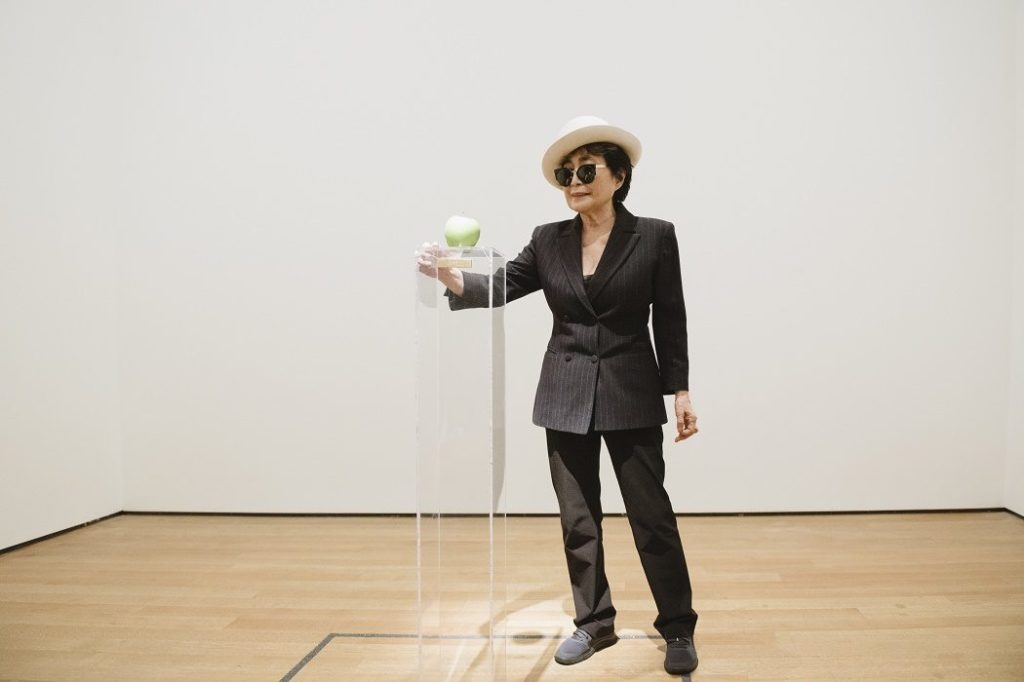
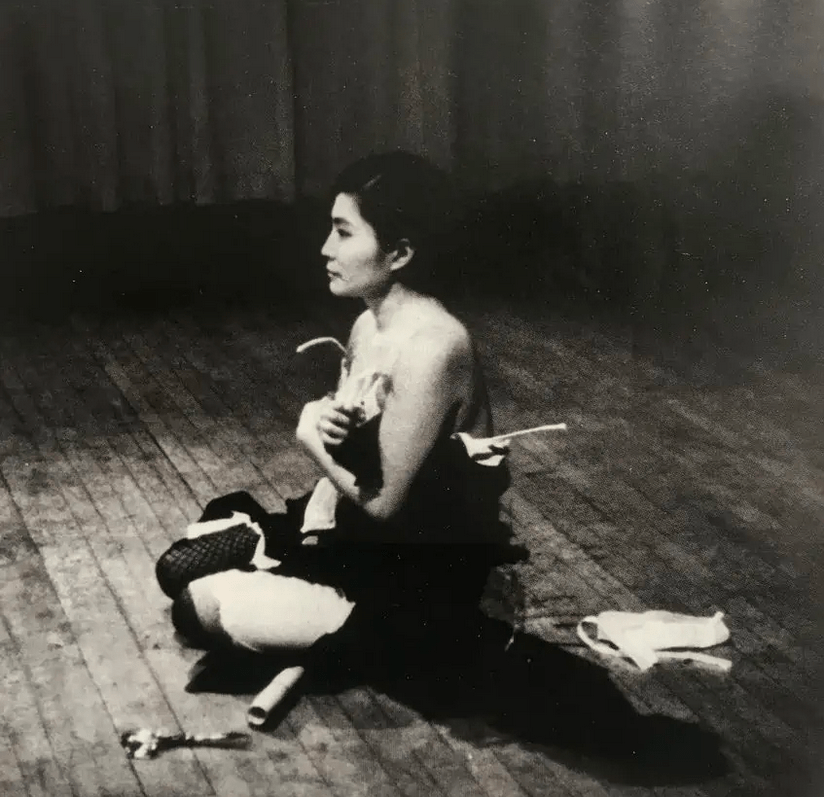


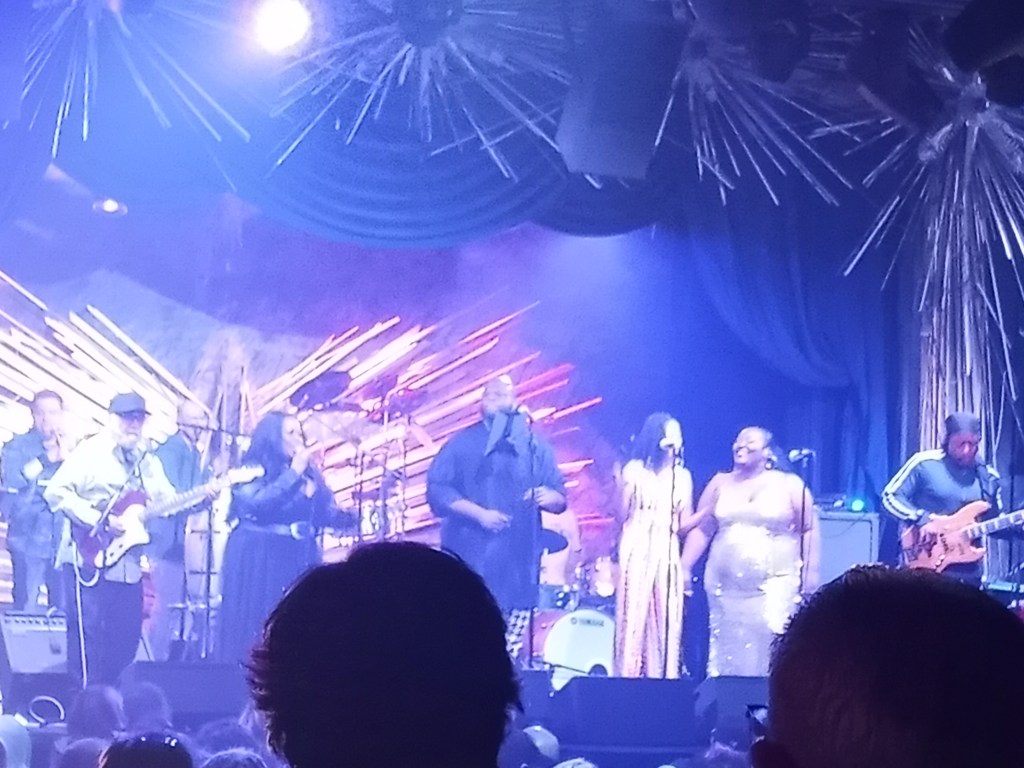

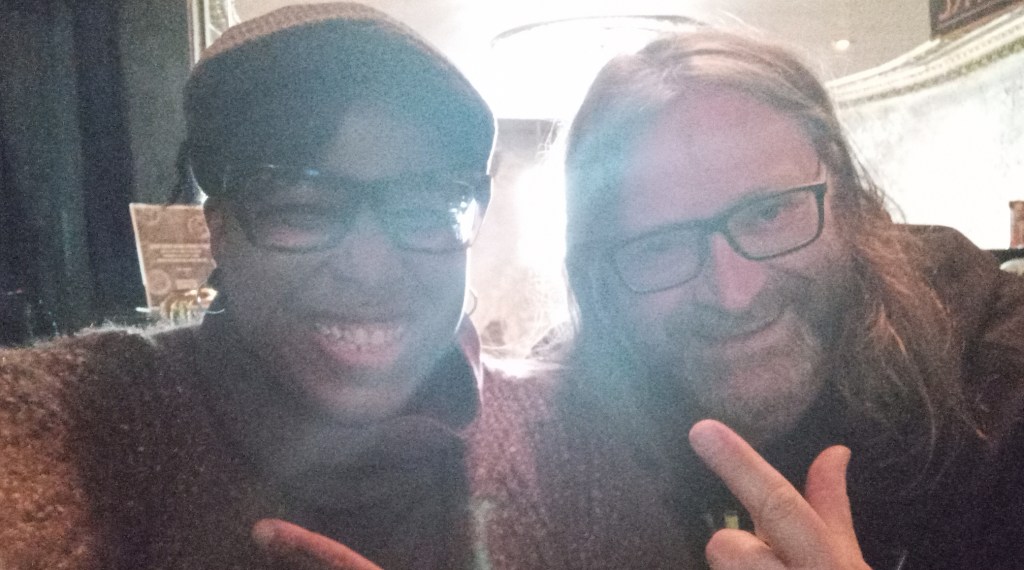


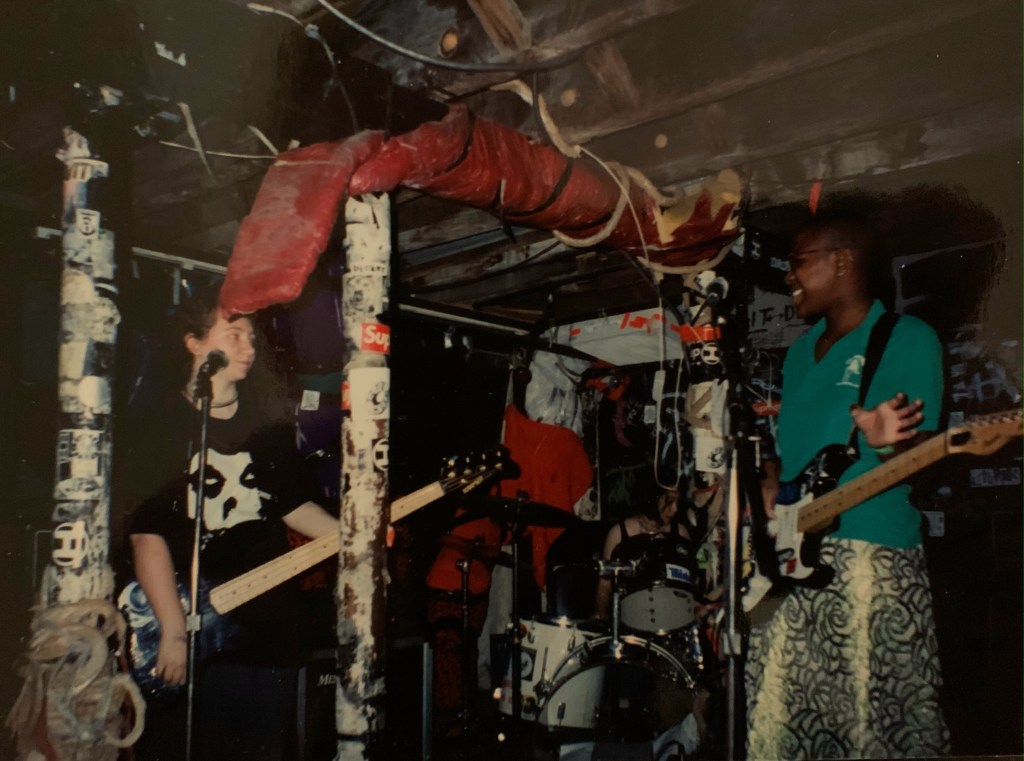
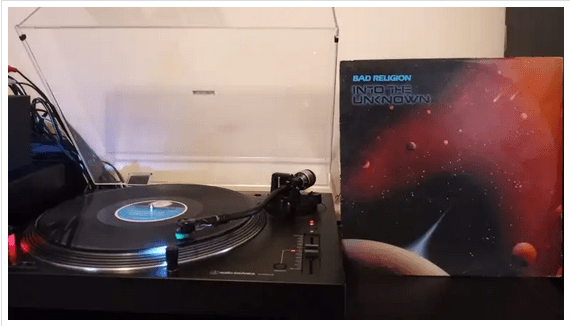
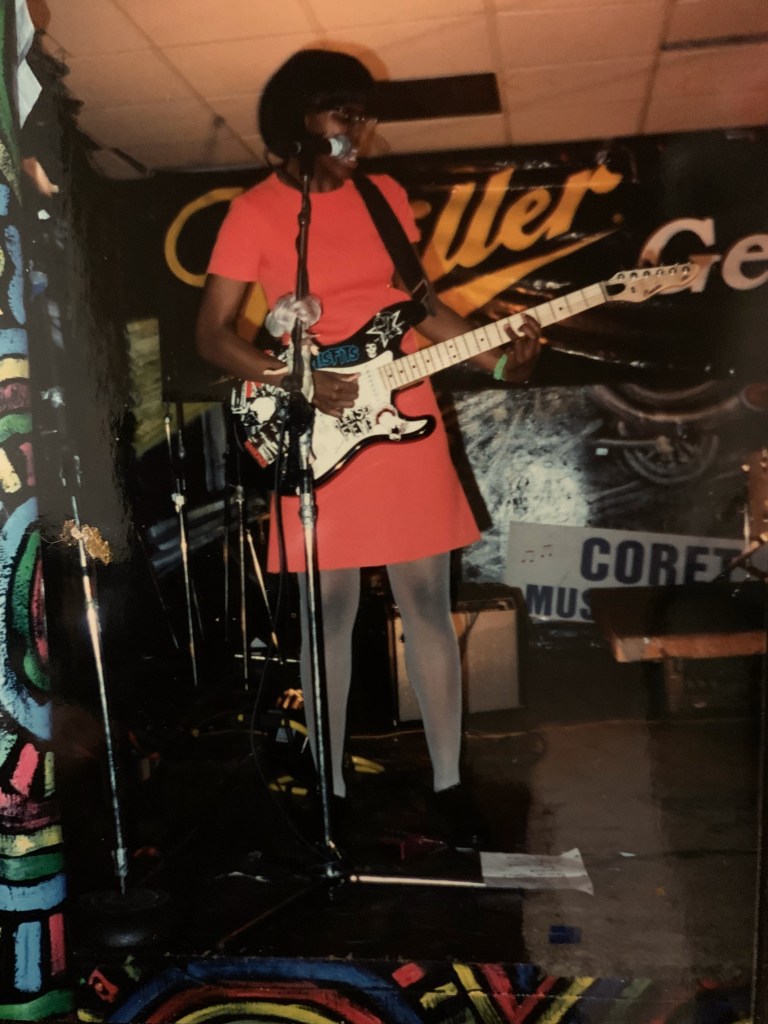
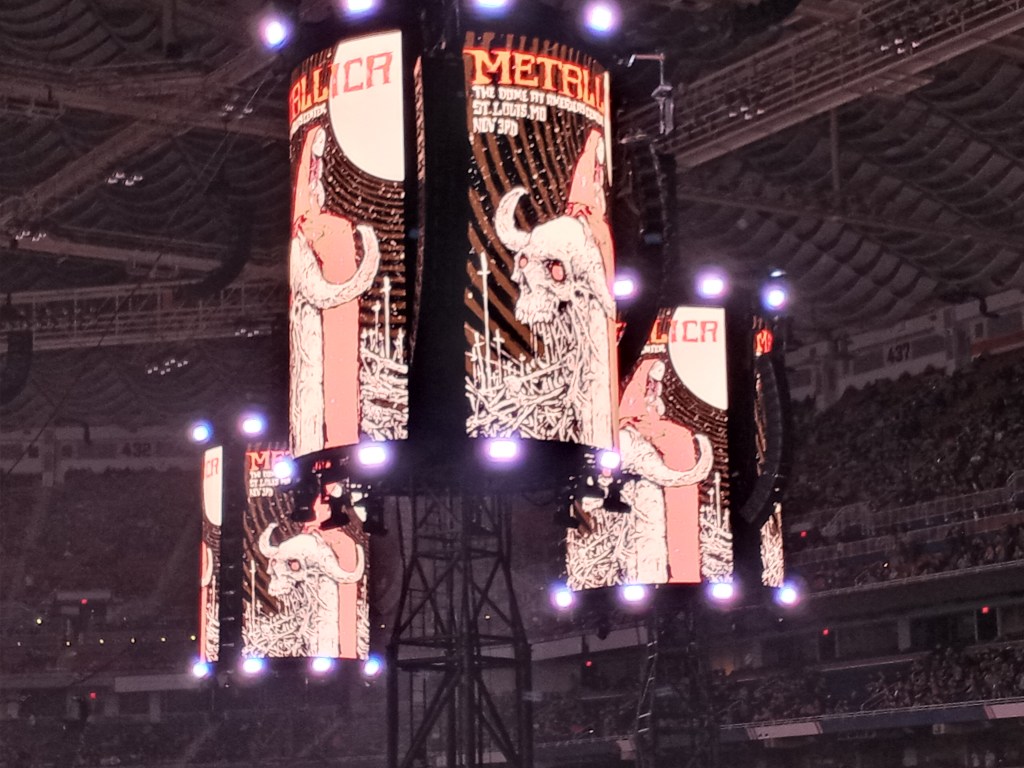

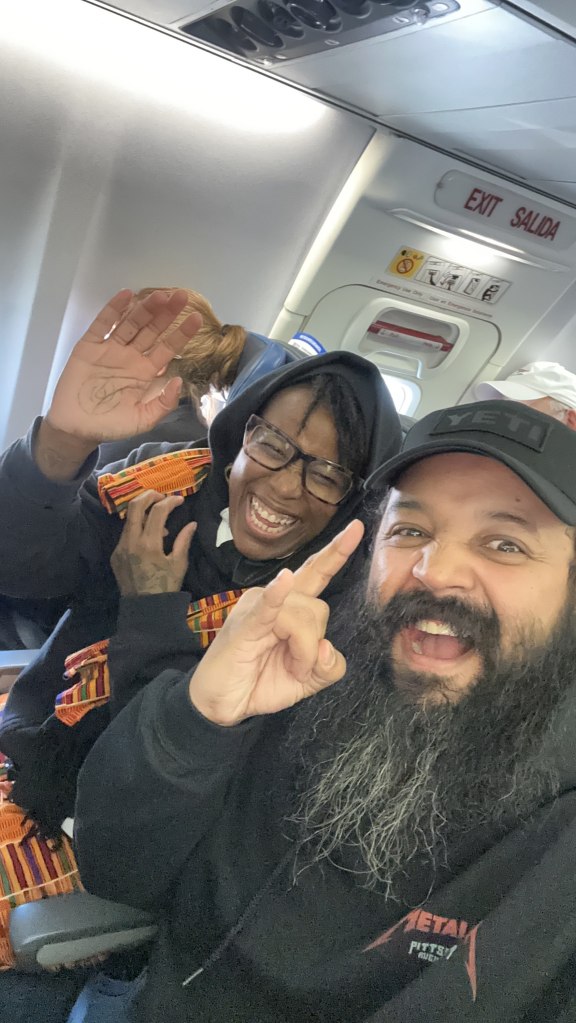

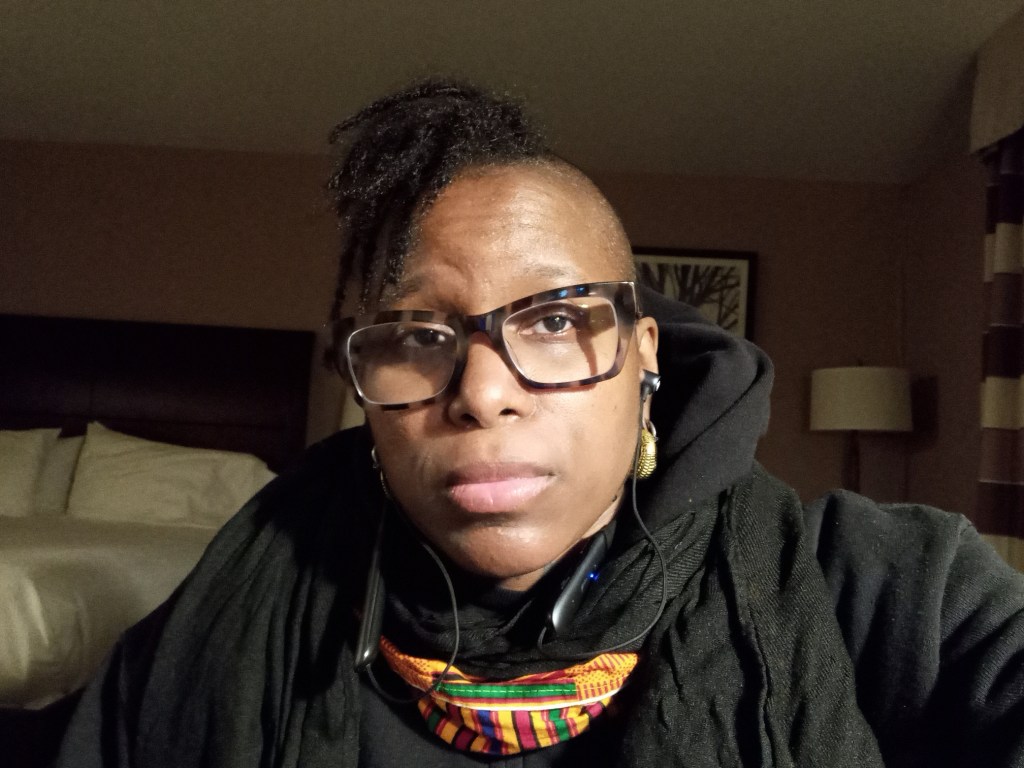



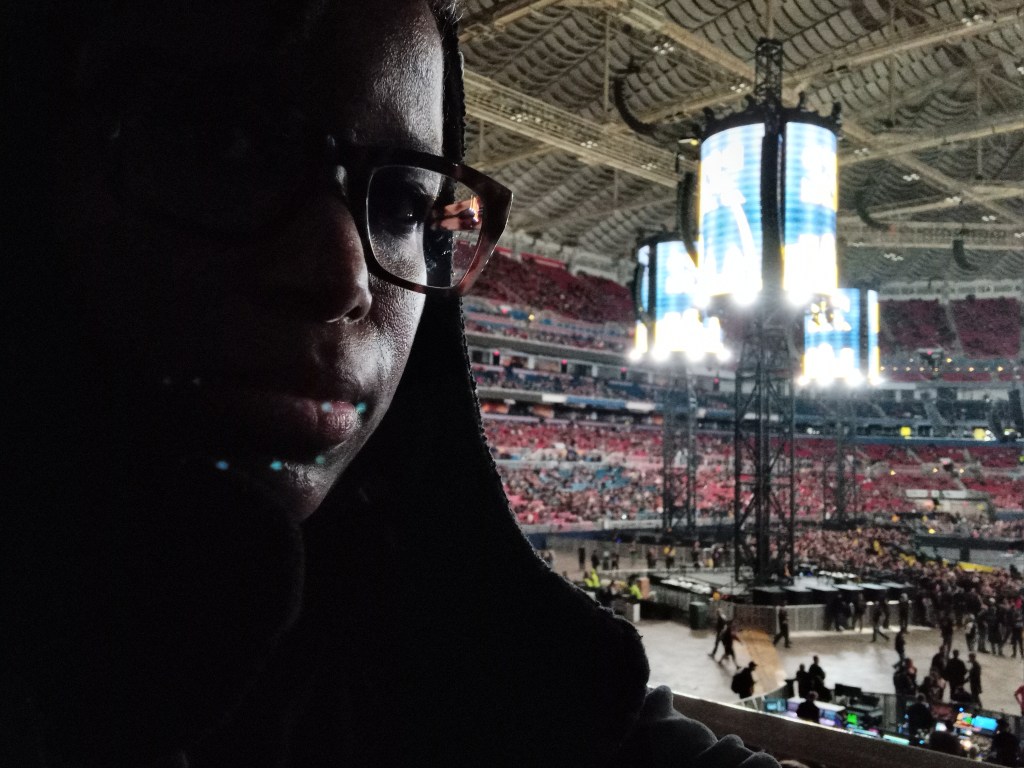
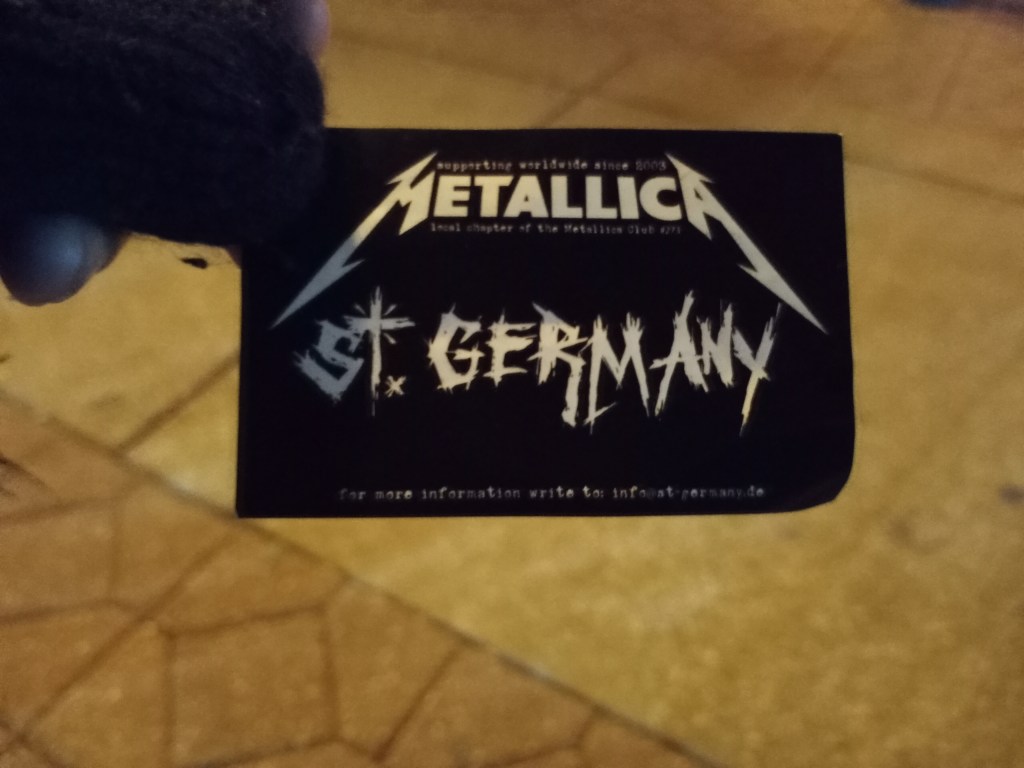
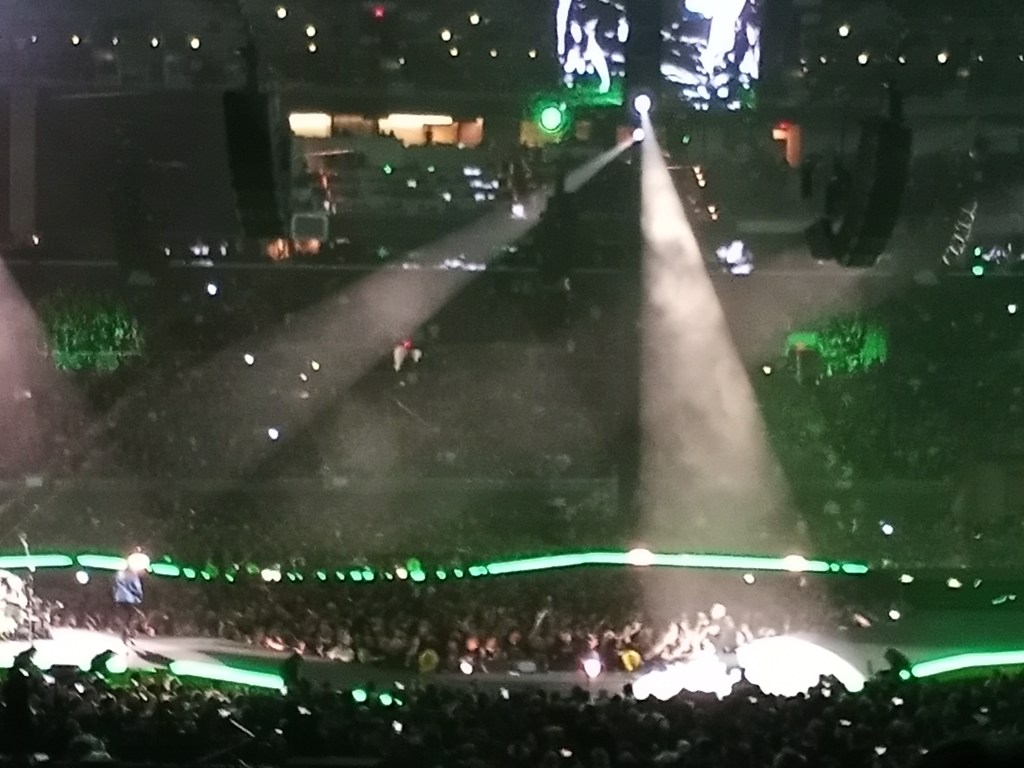
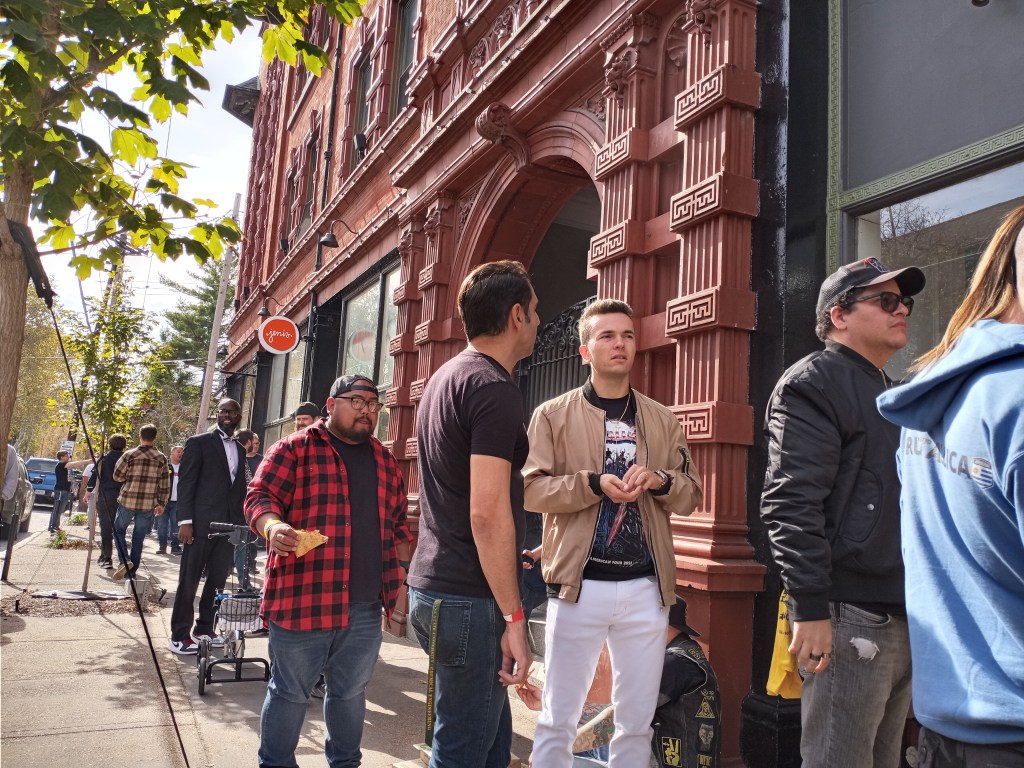
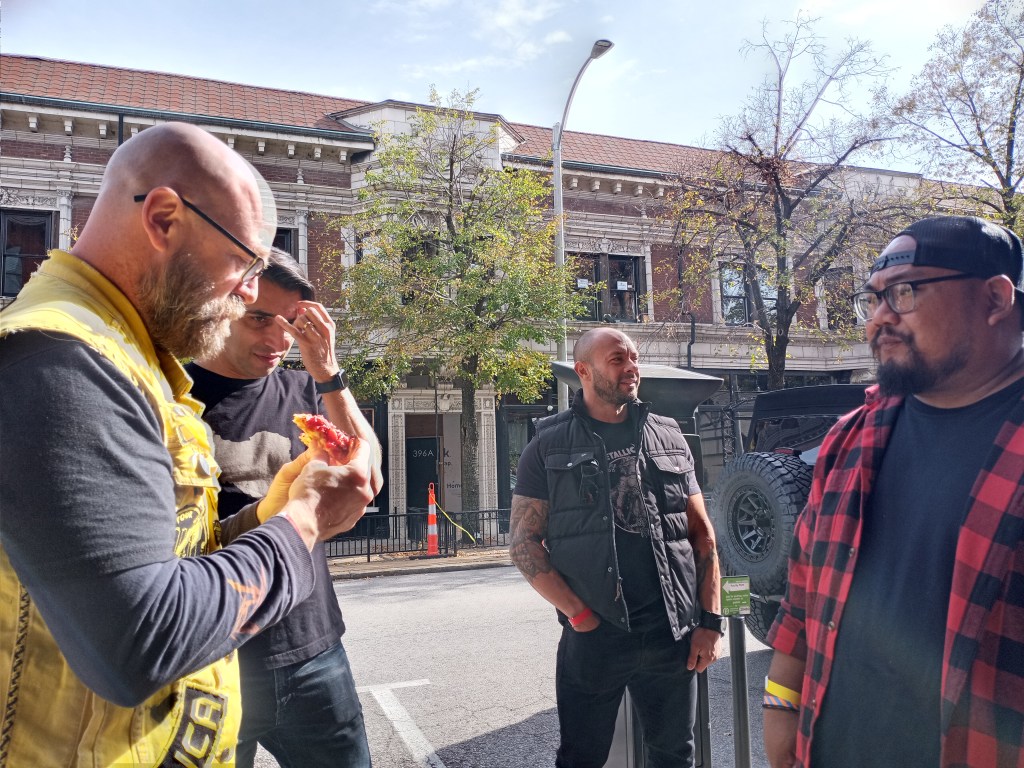
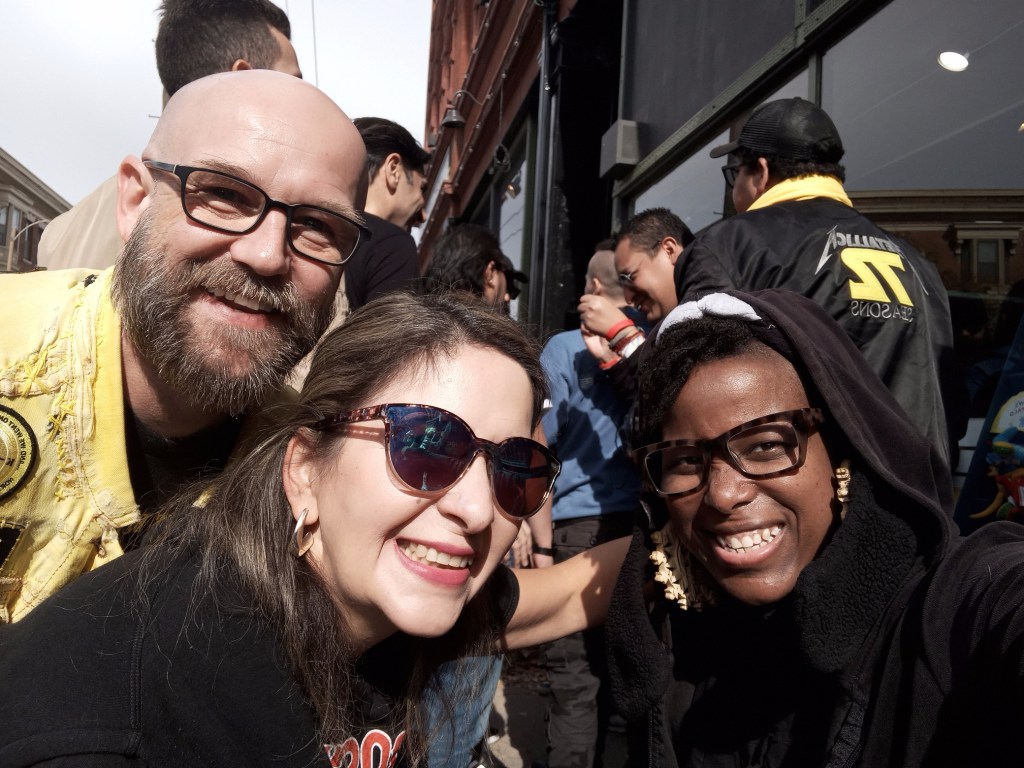
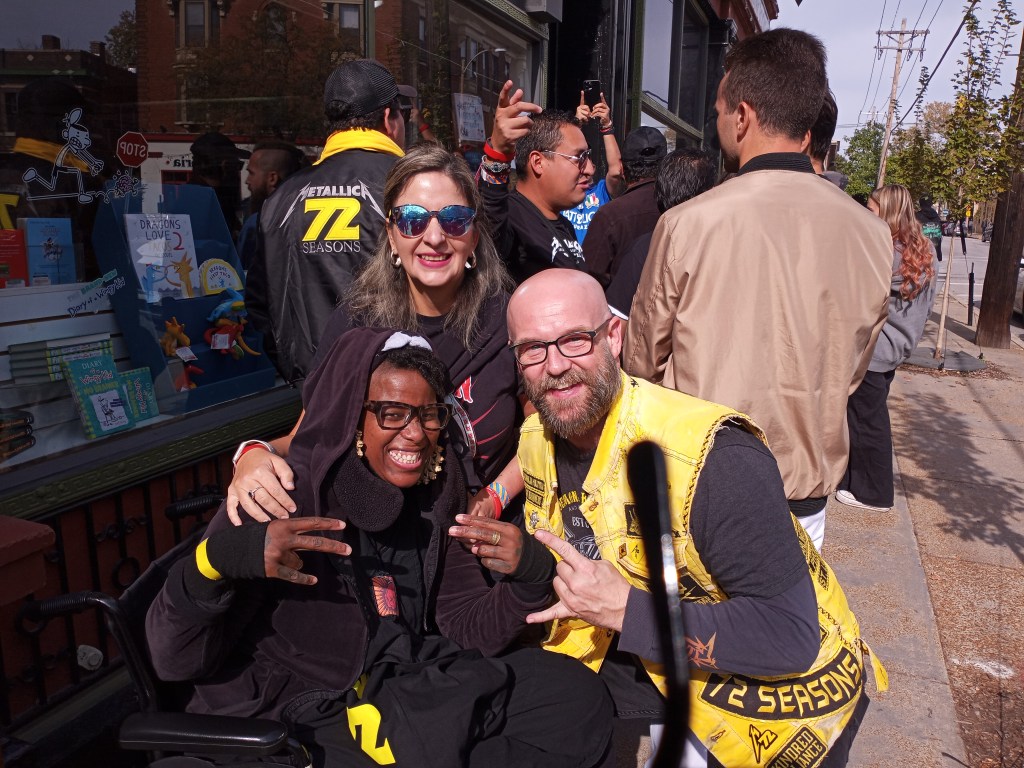


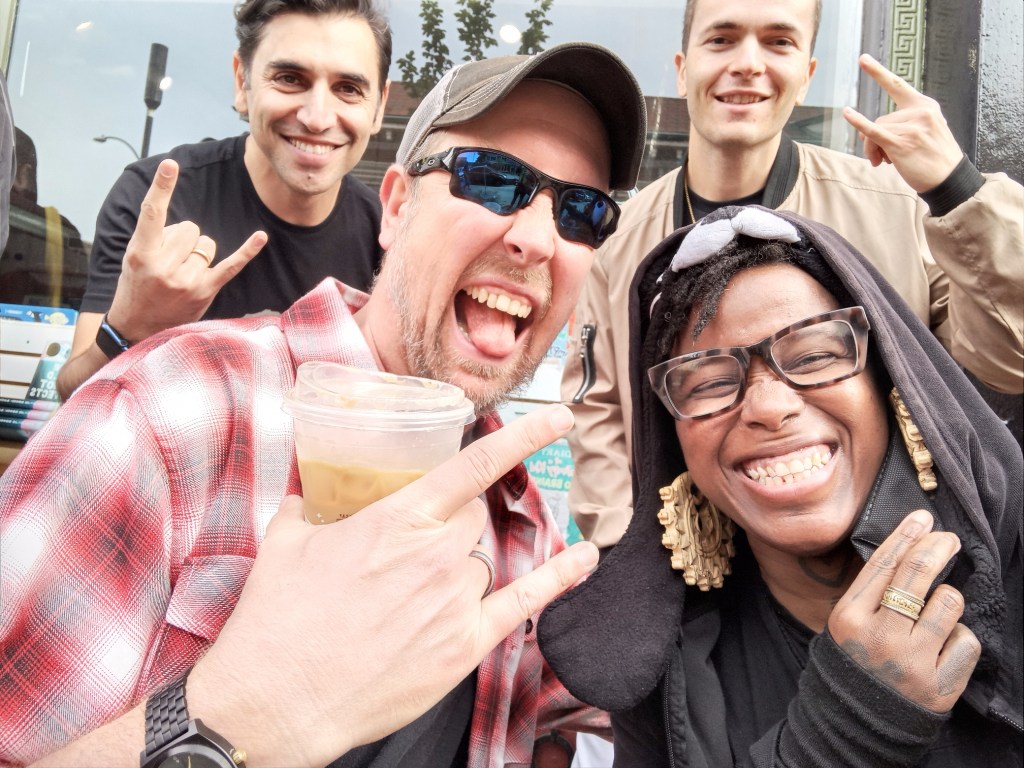

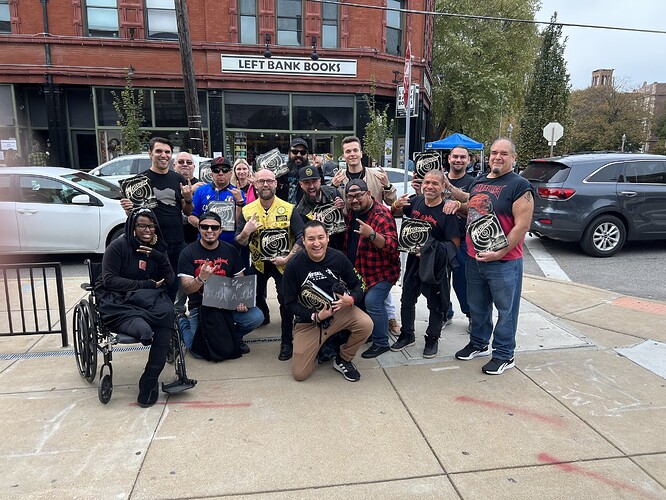


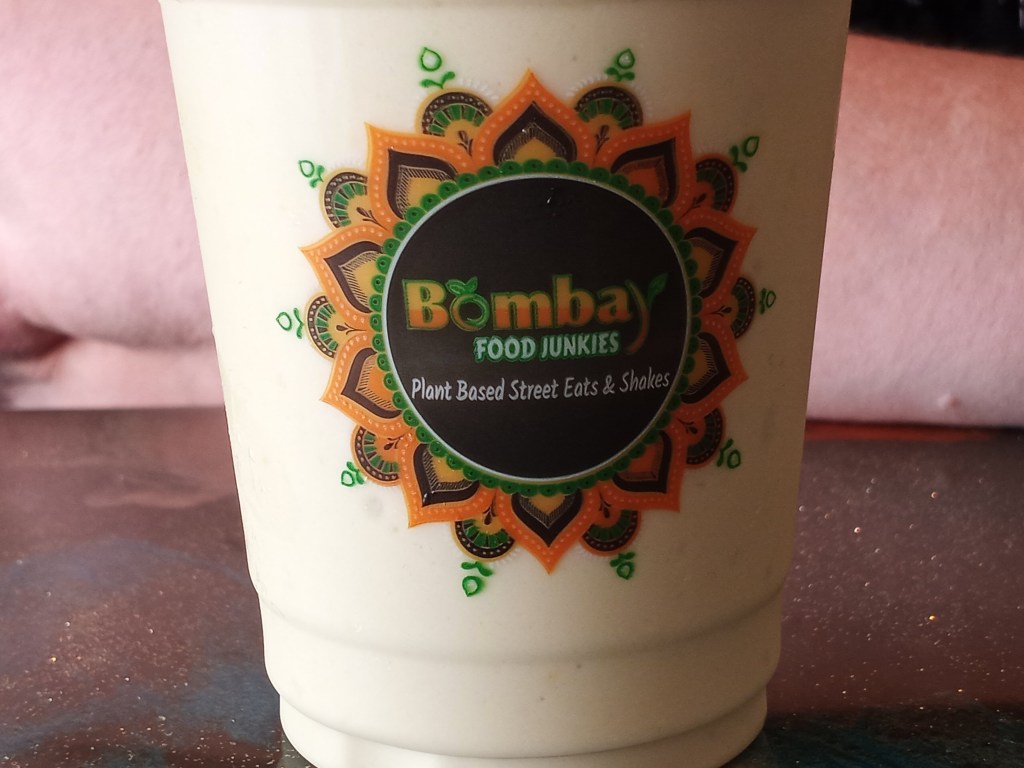
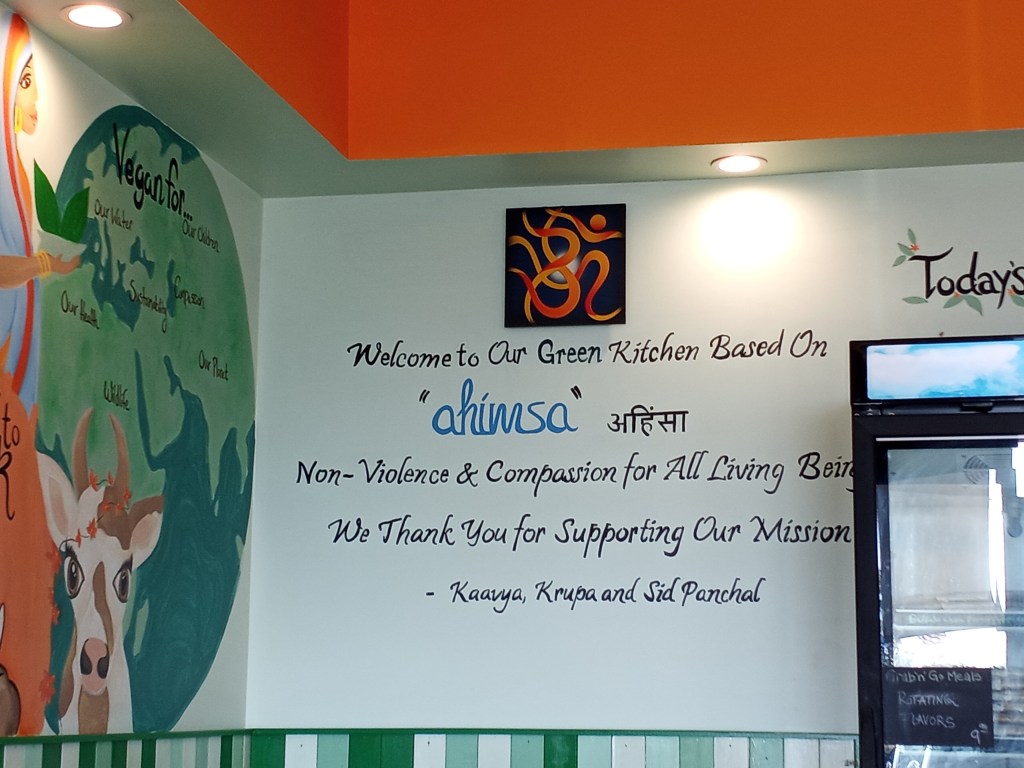
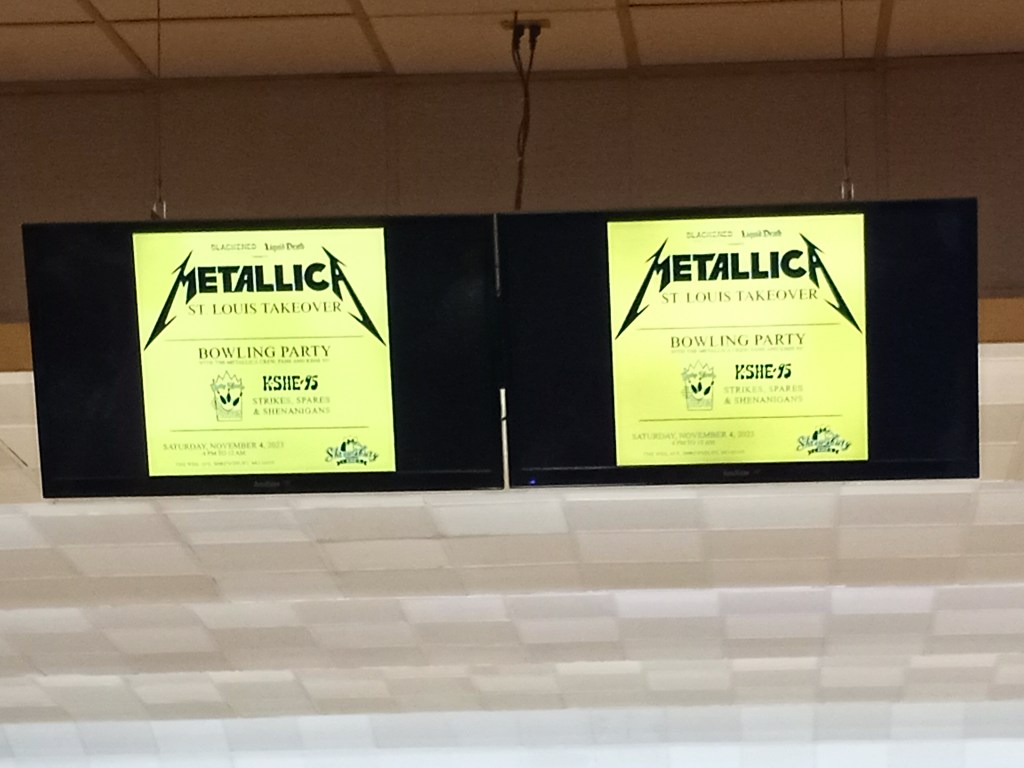

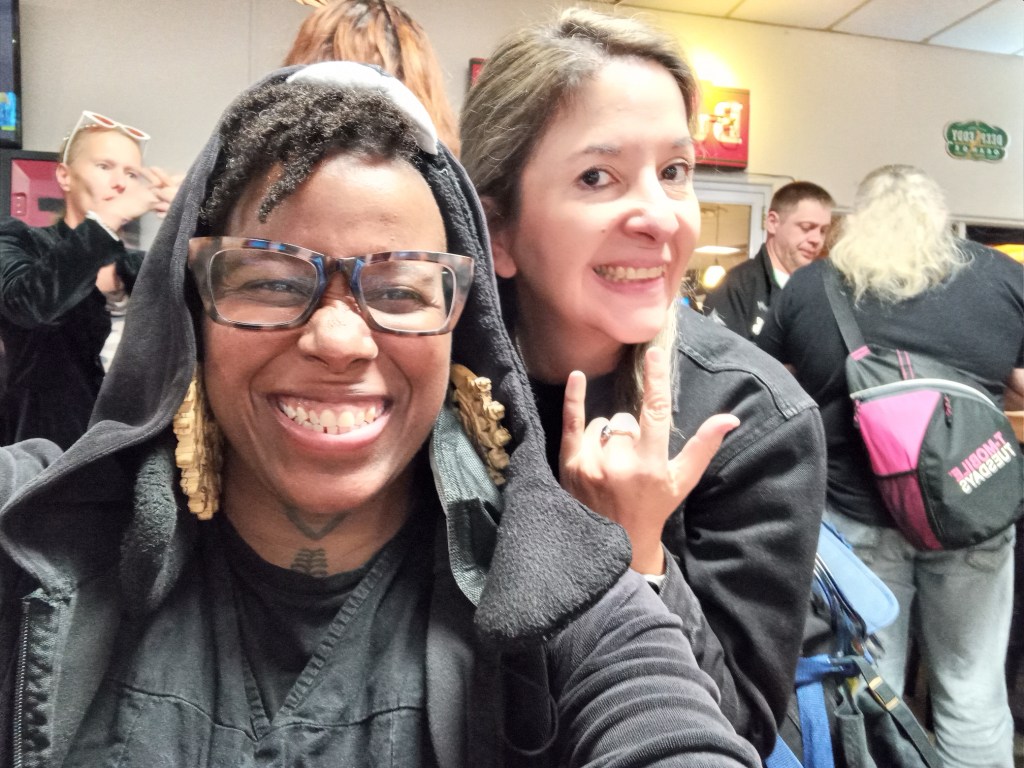
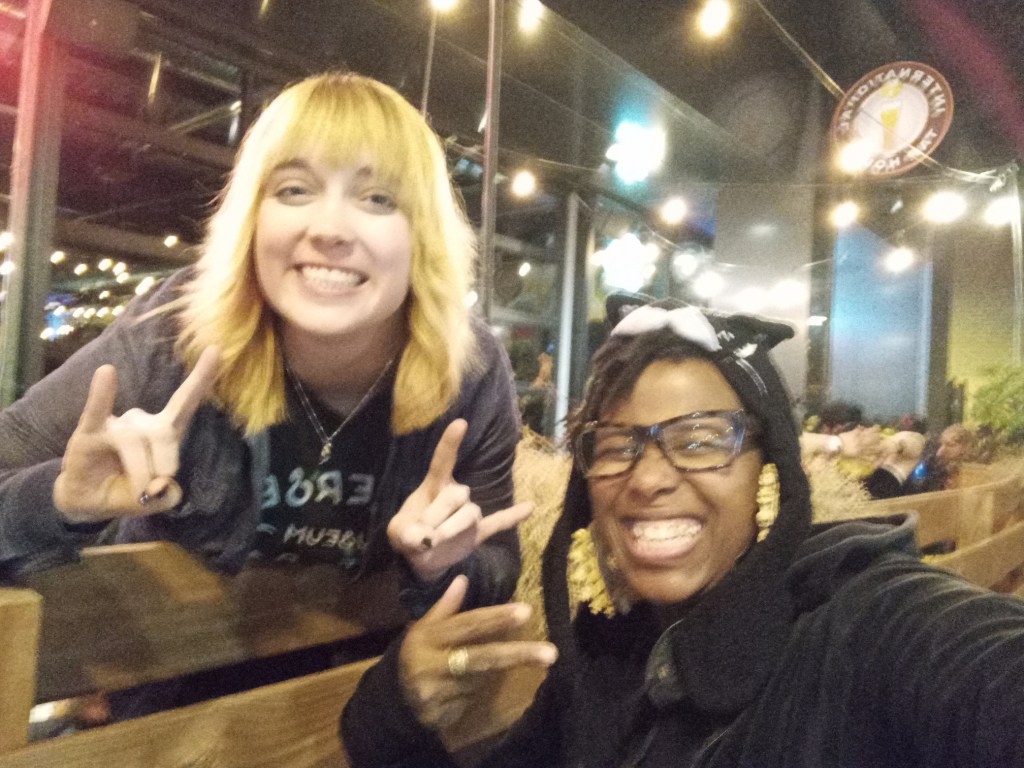

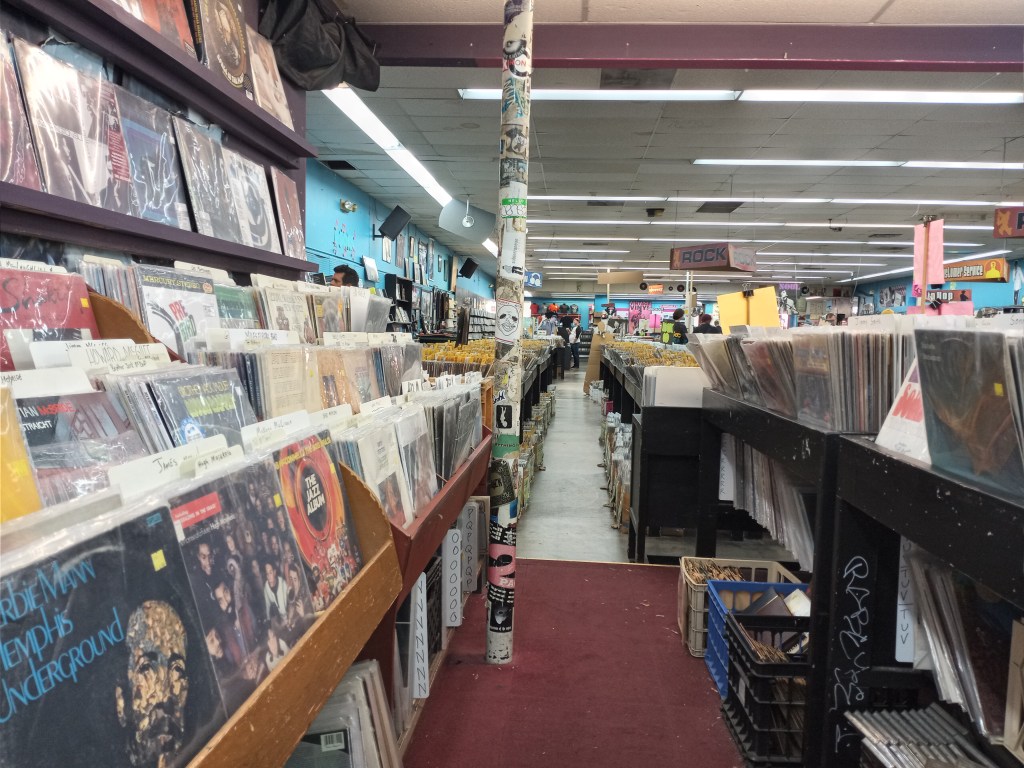

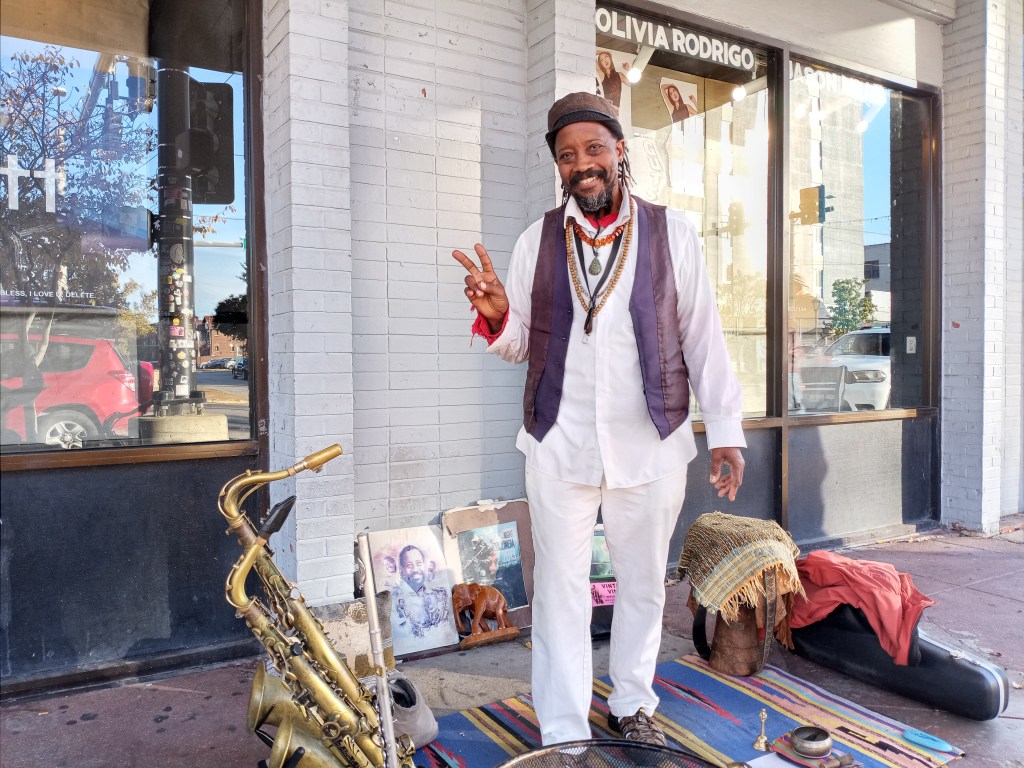
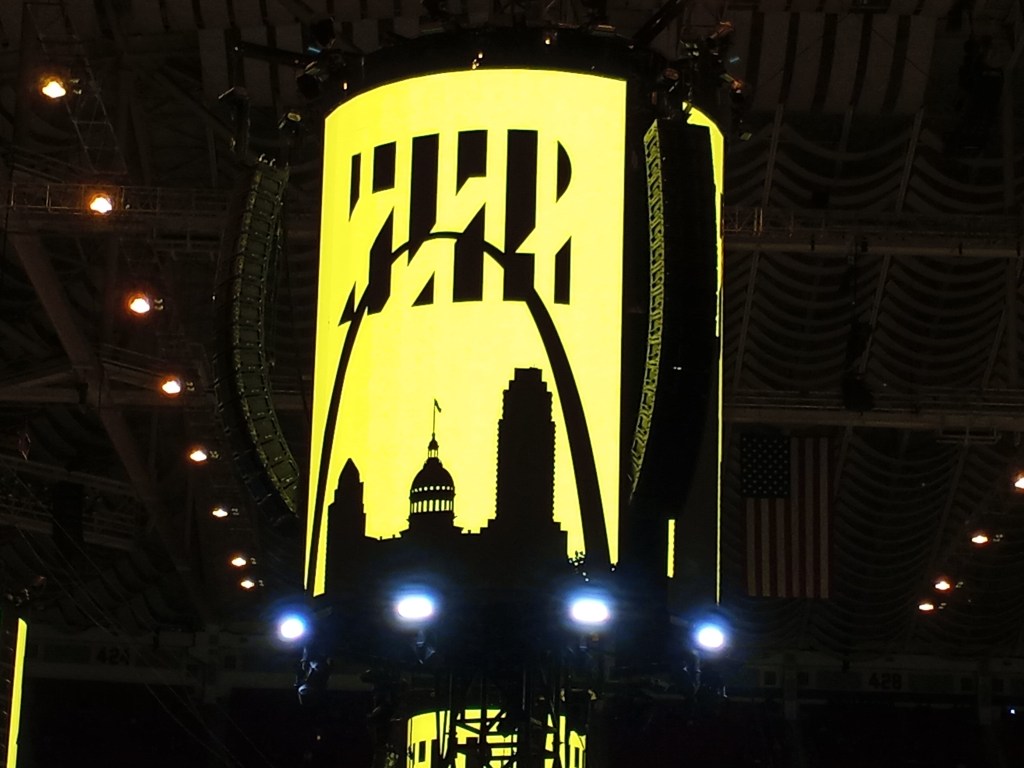
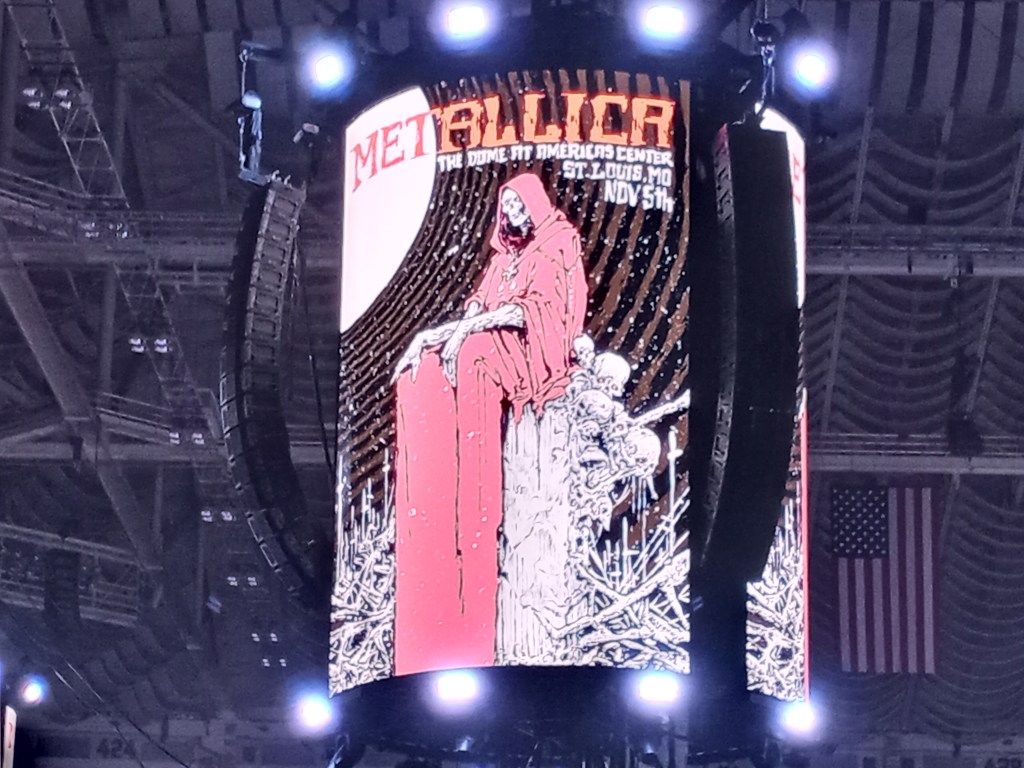


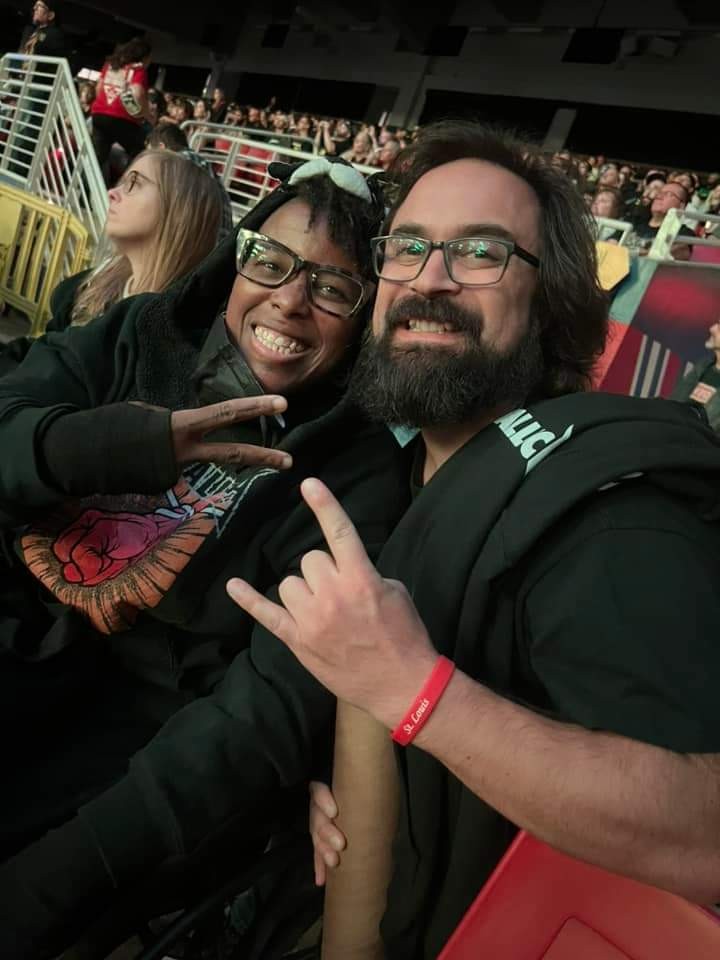
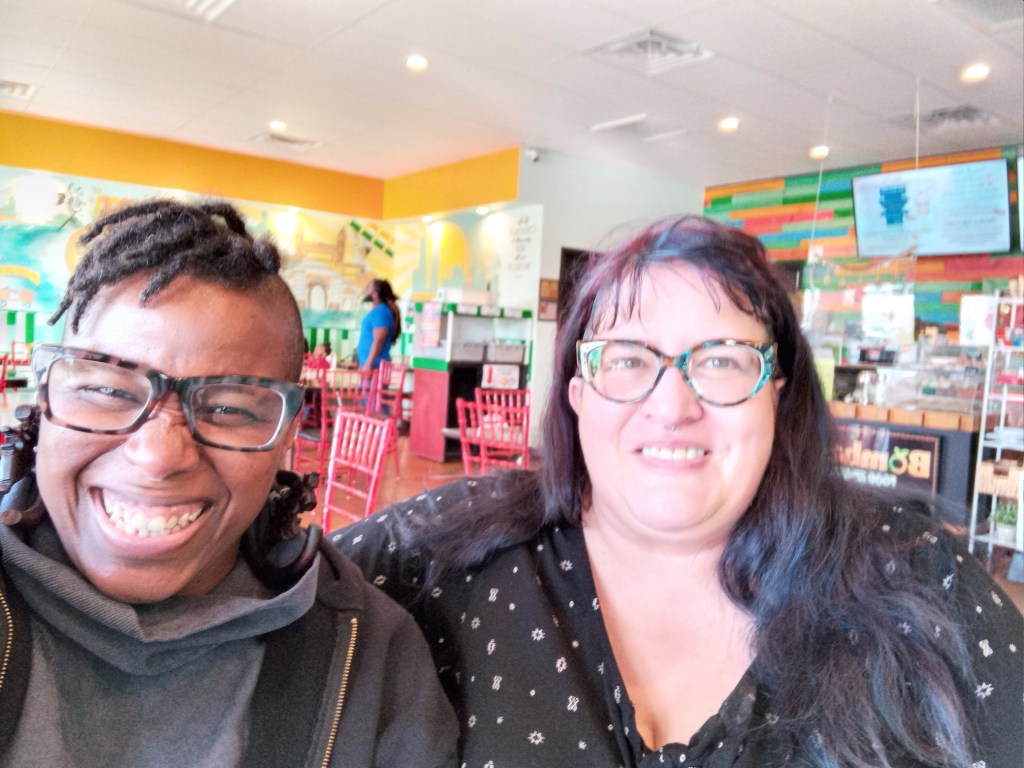
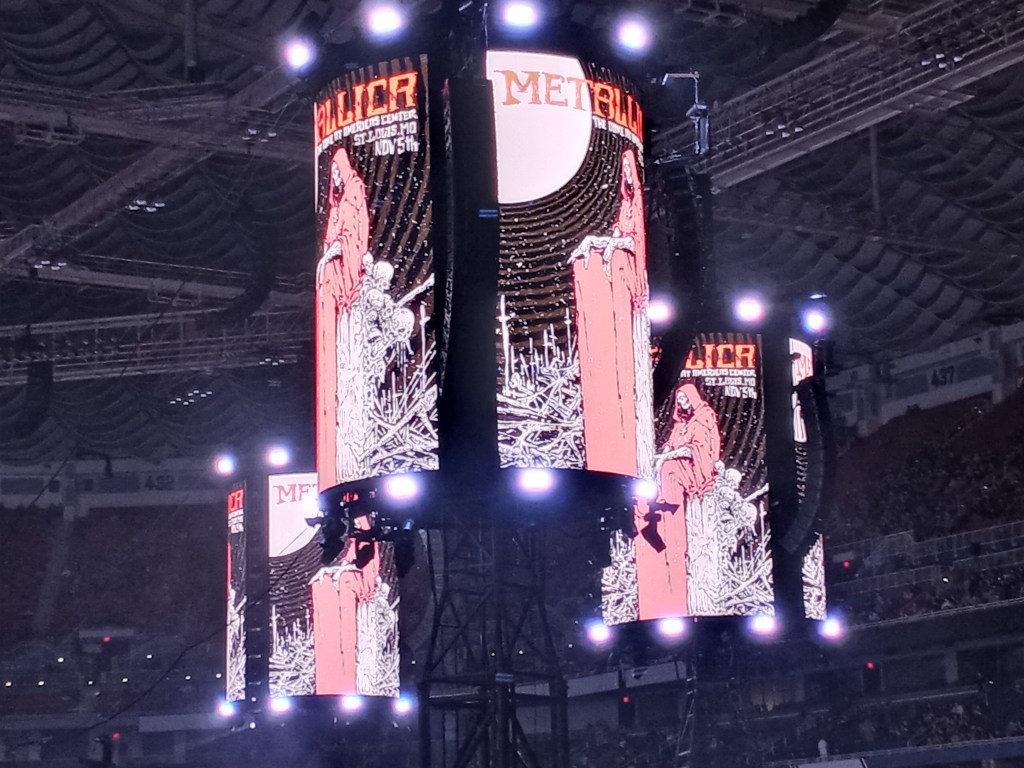
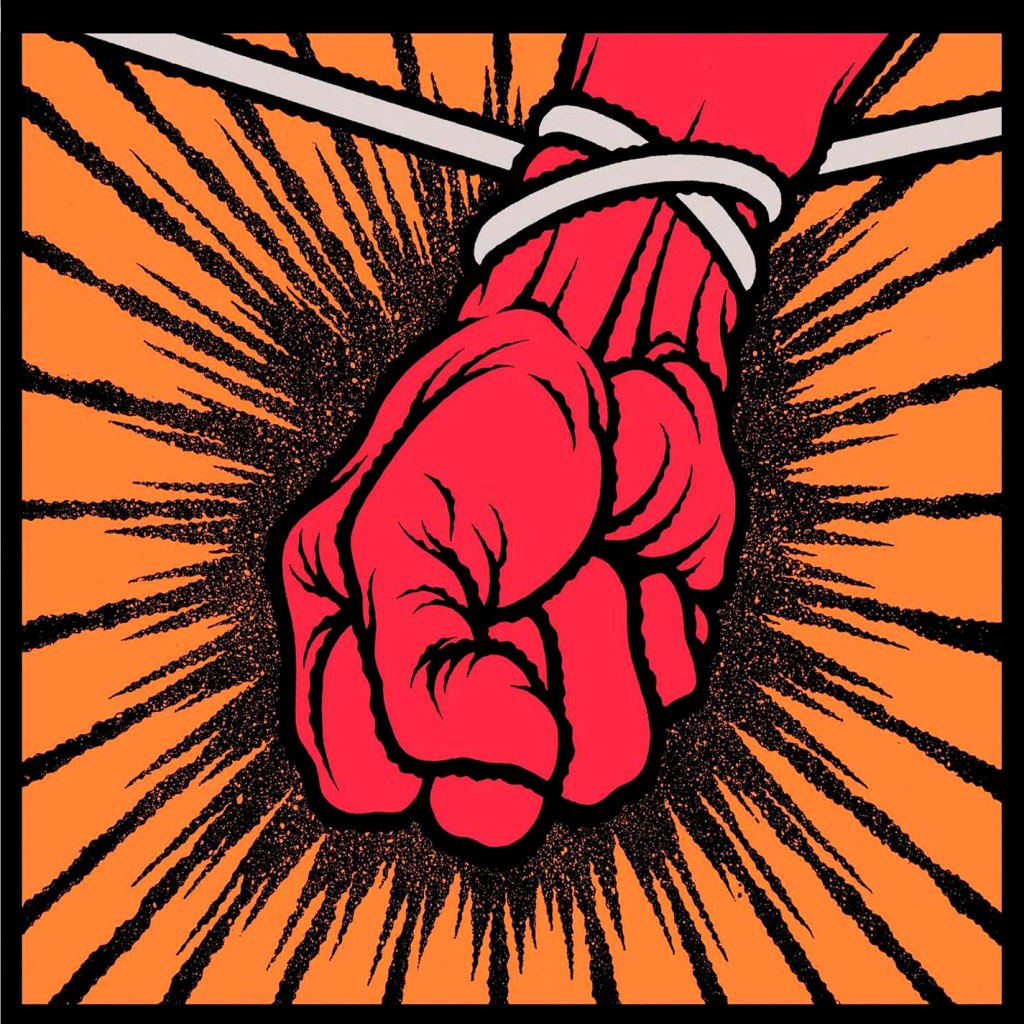
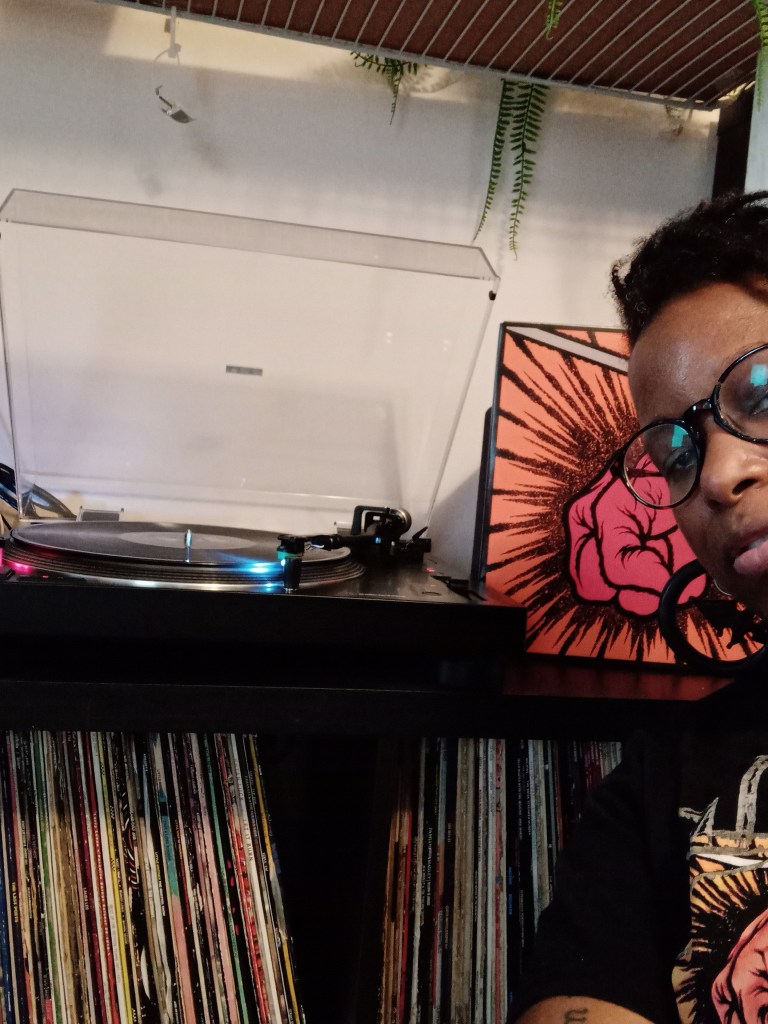

 the one woman apollo!